

Despite its shortcomings, The Devil Judge delivers a fast-paced and eccentric societal commentary on the tainted relationship between capitalism and democracy with an impressive blockbuster-worthy budget and cast.
With the current political climate that fogs the world, judicial dramas are on the rise within kdramaland. Dramas encapsulating the racial, sexist, and classist problems that plague democracy are the current money maker; thus, they are also becoming indistinguishable from each other as they are released in swarms. A man and a woman partner up to seek justice and revenge while blurring the lines between right and wrong— I just described Lawless Lawyer, Suspicious Partner, Witch’s Court, Vincenzo, etc. So when The Devil Judge premiered and flaunted two male leads with a burning tension between them within it’s first episode, it was different and intriguing, but as the show continued, the plot kept straying from the stereotypical path and set expectations pretty high, but did it follow through?
The Devil Judge is a 16 episode South Korean drama that centers around a post-pandemic dystopian South Korea in shambles. The president is a questionable former actor and the justice system reeks with corruption as capitalistic desires outweigh the importance of punishing criminals. The public has no faith in it’s government and revolution is on the rise— so how does the government try to fix it? Why by starting a court reality show of course! Three judges are anointed to lead the first ever interactive judicial system reality show; citizens download the show’s app and have direct influence on the court case results in hopes of reestablishing the trust between the government and its people.
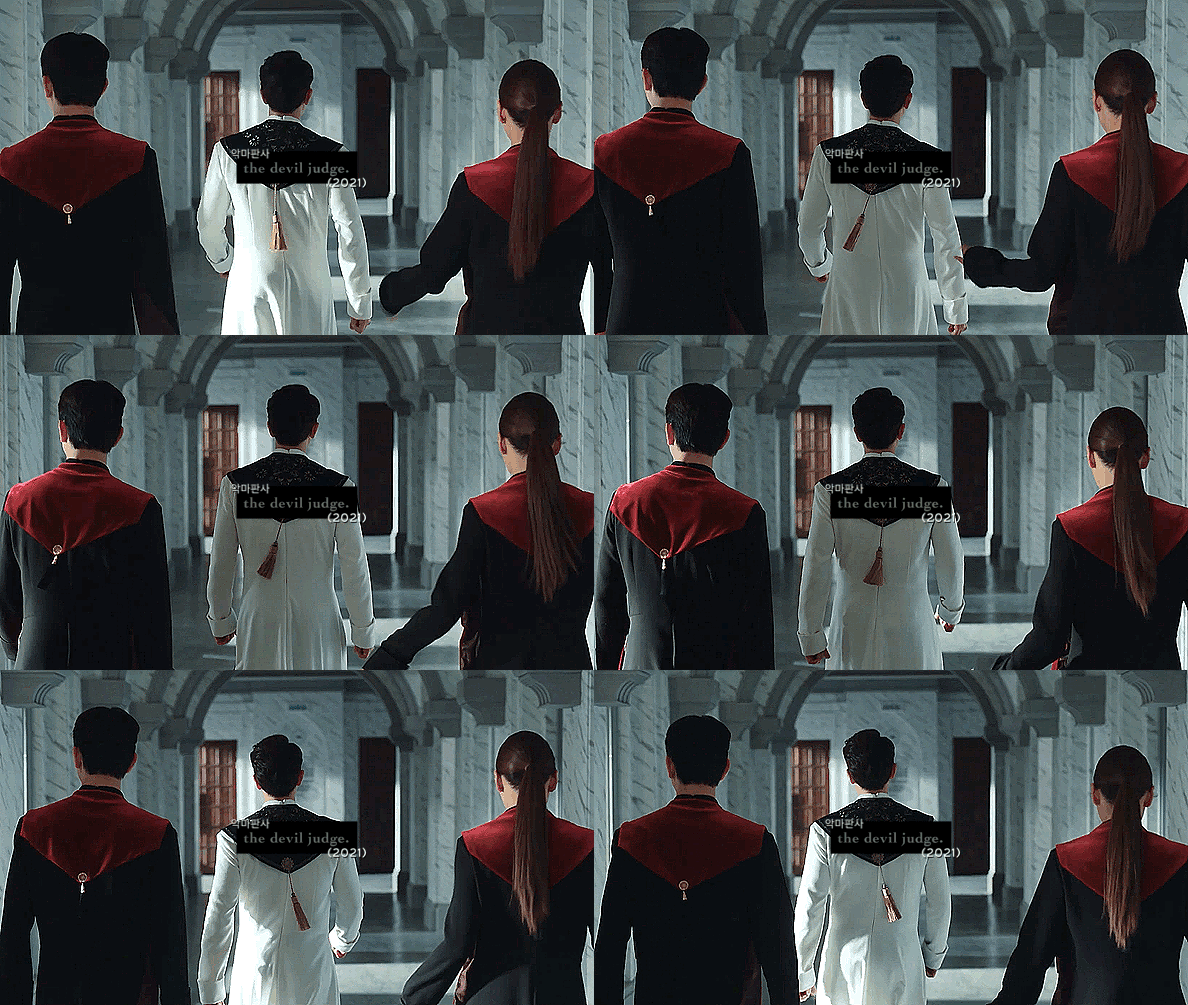
Kang Yo-han, an established judge who is known for his extremism, leads this panel and brings about turmoil within the justice system when he takes crime and punishment to a new level with his newly gained public power. Kim Ga-on, the second on the panel, is a newly graduated judge who struggles to find a balance between Yo-han’s extremism and the traditional ways he was taught. Oh Jin-joo, the third judge on the panel, is a woman from a poor background who champions for the minority as she navigates the misogynistic field of law. These three judges join together in an attempt to fix a broken justice system and start a new era of South Korean law, but they all hold secrets that rear their heads as more cases come to a close and unravel the political web that embroils the very fabric of South Korean society.
With a blockbuster-worthy budget and cast, The Devil Judge delivers a fast-paced and eccentric societal commentary on the tainted relationship between capitalism and democracy. The insane, almost comical plot lines satirize what the world today knows as judicial practice and reminds viewers that devils and monsters are always closer than one would like to believe. It is not without its faults, however, and falls in it’s lackluster treatment of women within this post-pandemic culture; with nearly every woman with power dying within the series, the feminine has no permanent or prominent place in this world besides serving as poor plot devices for the men within the story.
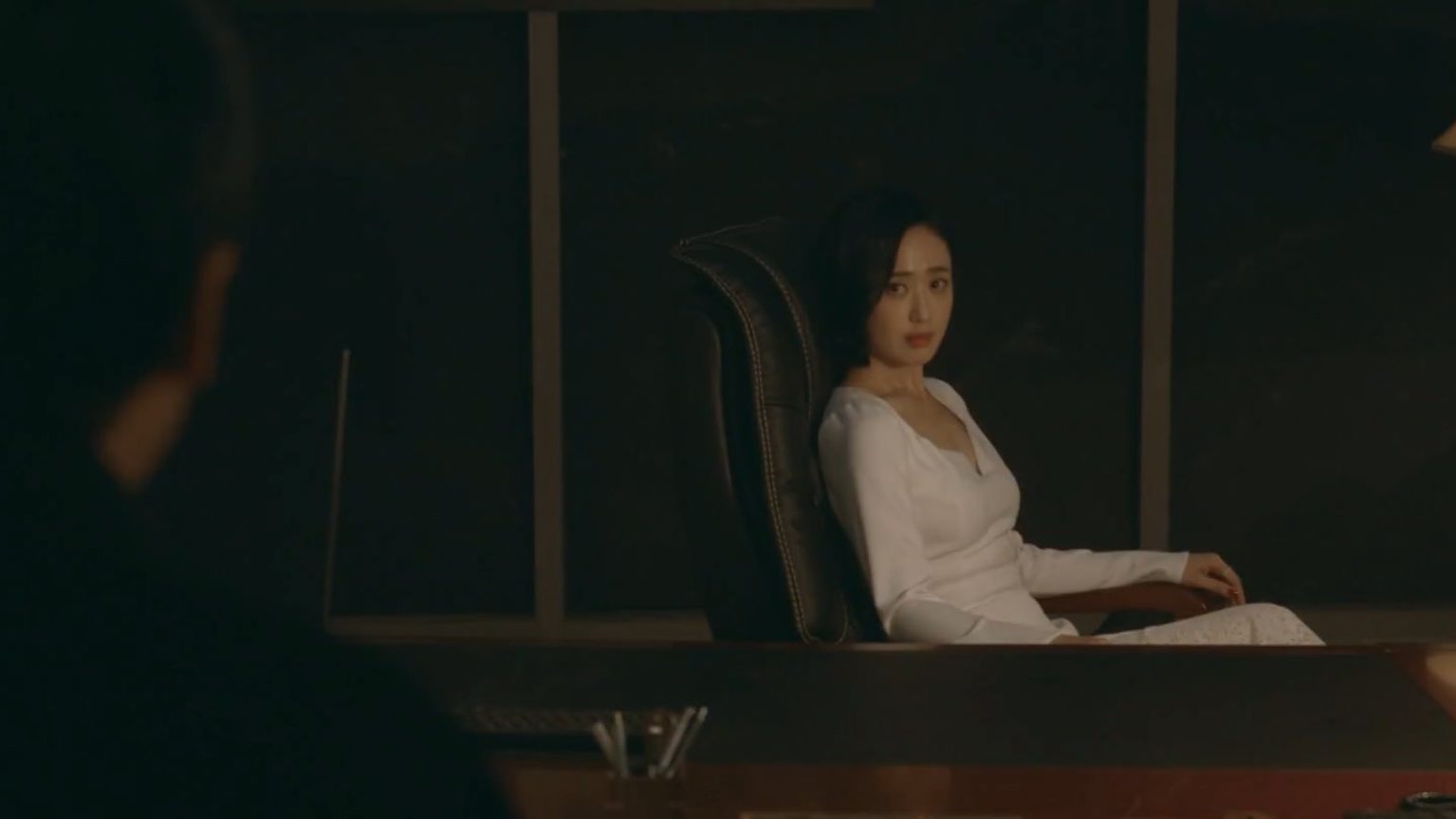
Opposite our judges’ panel, viewers are introduced to Jung Sun-ah, the secretary of the leader (who becomes the chairman) of the Social Responsibility Foundation, a perceived charitable organization that holds members from all tiers of the South Korean political tree. Jung Sung-ah is extremely powerful and maintains a tense, secretive, and sultry relationship with Yo-han. Their desire for power puts them at constant odds and theirs is one of the most entertaining and complex relationships in the show. The two manage to ground yet bring out the worst, most despicable sides of one another up until their last moments together on screen.
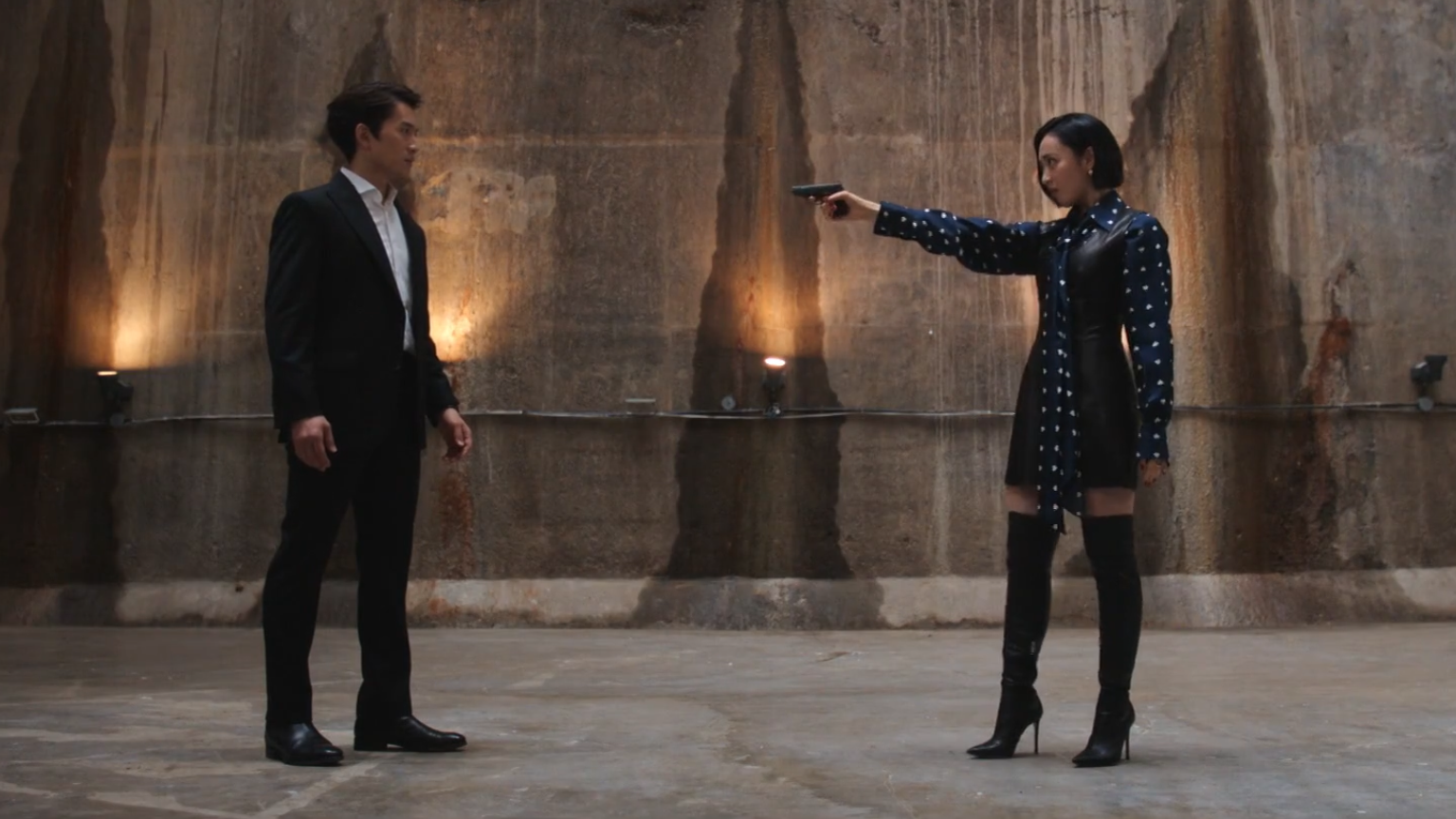
Despite her oddly compelling craziness and power, Sun-ah’s character, sadly, does not escape the fate of the non-conformative woman and falls to the floor with a bang in the finale. Her death serves as a reminder that conformity fuels society and those that choose another path will face punishment; she was too powerful, too confident, too successful in her sins to survive. Sun-ah’s character broke the dichotomy between woman and man as she harbored all the political power (and even more) of her male predecessors and counterparts; escaped the female life of a maid and took upon a stereo-typically male role of chairman; played the men around her like puppets on strings; and still managed to be the sexiest, most feminine character in the show. As a threat to the masculine hierarchical political system, Sun-ah couldn’t win within The Devil Judge. This is the most dangerous part about her— though seen as the main antagonist and murderer, viewers like myself were rooting for Sun-ah to win.

Along with Jung Sung-ah, other women that straddle both gender roles within The Devil Judge meet a cold coffin. Yoon Soo-hyun, a young police woman who is Ga On’s childhood friend and lover, ignores the opinions of the men in her life and chases a lead that gets her killed. Cha Kyung-hee, the corrupt, power hungry Chief of Justice, sacrifices her son in order to uphold her political standing and consequently smokes one last cigar as she ends her own life in the very chair she fought so hard to hold onto. Both women reject the stereotypical female roles (obedient lover and loyal mother) given to them and only have a pool of blood to show for it. To put it simply— The Devil Judge has a woman problem. Our male leads escape death and end the show unscathed despite their moral ambiguity as a result of their dominance in this fictional world. The dystopian landscape intensifies the misogynistic and sexist policies of our modern world and despite it’s core, did not serve justice to women within it’s script.
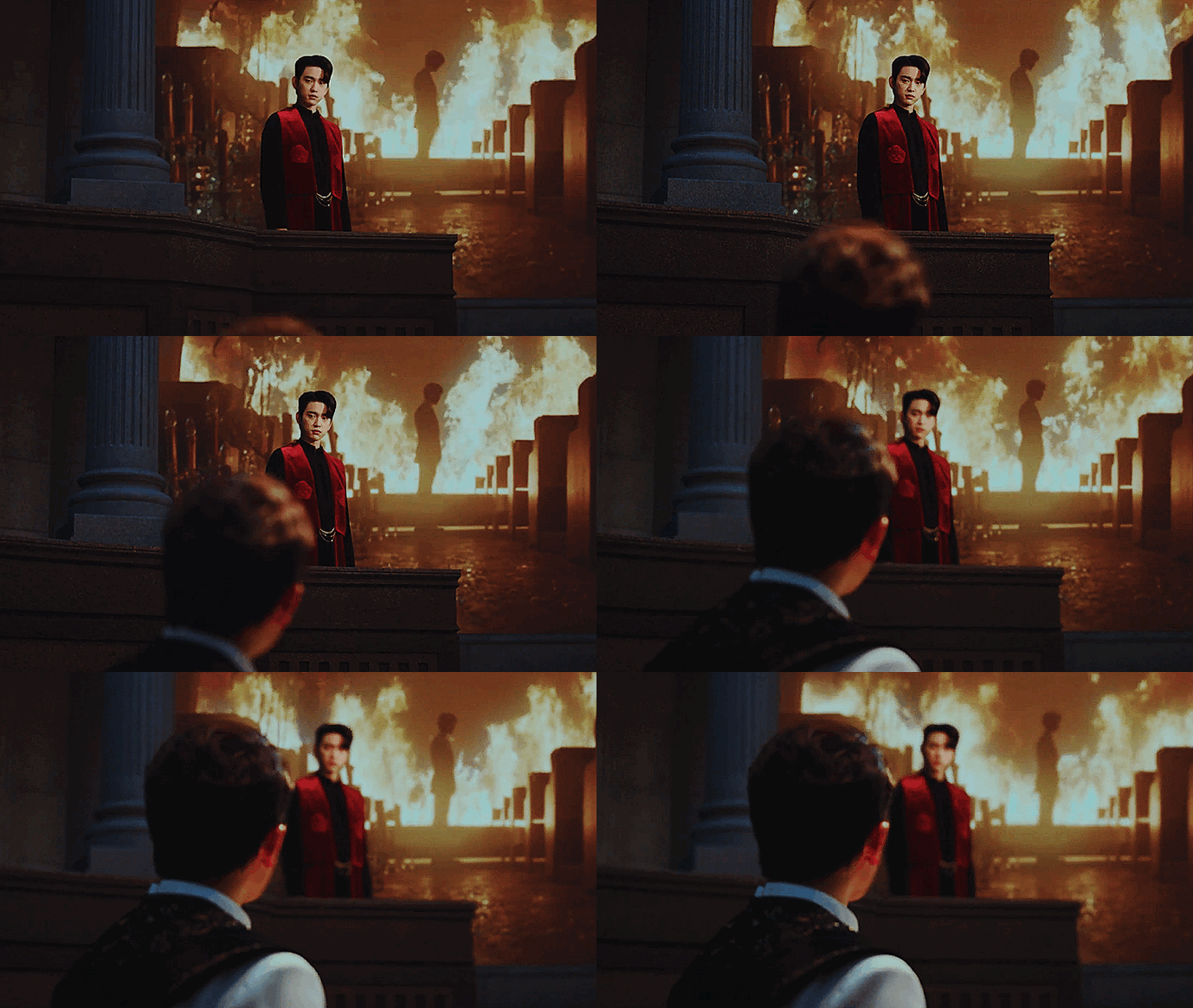
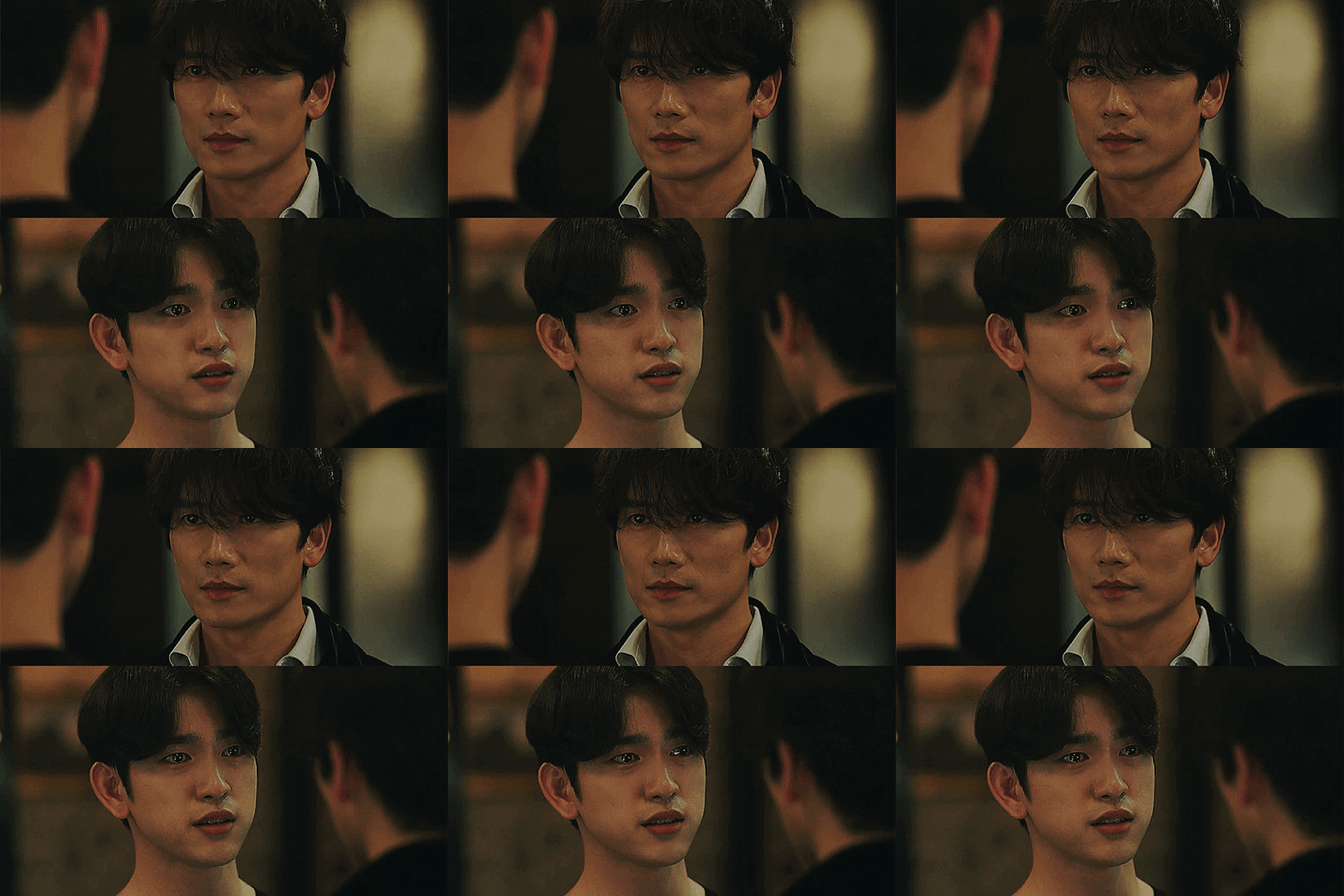
Since women are cast out of the limelight, who stands smack dab in the middle? Kang Yo-han and Kim Ga-on occupy center-stage as their relationship ebbs and bends as easily as the light around us. Two men at constant odds yet unable to stray from one another as they grow dependent upon the very breath of the other. Yo-han challenges every moral fiber in Ga-on in order to show him the reality of true justice whereas Ga-on tears down Yo-han’s walls in an attempt to humanize the man the world has deemed a devil. Like fire that scorches then sets, these two men burn themselves until only embers remain of who they once were.

Despite how much I enjoy this pairing and their poetic-ism, it is immensely and consciously queerbaity; the homoerotic subtext is consistent and tantalizing until the very last seconds of the drama, yet never canonical and always challenged. For no logical reason, Ga-on is the doppelgänger of Yo-han’s deceased older brother; this plot point serves no obvious purpose and is canonically explained as “just a coincidence” within the drama. It’s single purpose is to deny the queer and exclude them space within this dystopian world. The most prominent, developed relationship within the drama is cut short; however, to bounce off of this disappointment, Kang Yo-han and Ga-on are still mesmerizing to watch on screen as they discover how to overcome the highs and lows of a world run by political and capitalistic monsters together as a team. Our male leads exude charisma and dedication as their performances are highly exceptional and polished. When the two reluctantly part ways in the drama’s finale, tears of affection adorning their cheeks, audiences are met with the feeling that their story is only just beginning; from the ashes, they rise, ready to meet the world’s demons head on.
Demons and devils are the core of The Devil Judge. What are monsters in this world and who gets to decide that? When the world falls apart to shambles, society is seen in its barest, most vulnerable form as people choose between either falling back onto tradition or designing a new world. Despite the drama’s big baddies falling, tradition still reigns supreme in this fictional rebuilding of South Korean society seen in its poor treatment of anything not stereo-typically masculine. In the final act of episode sixteen, Ga-on gazes upon the new government officials who claim the corruption is over, who claim they will fight for justice, yet they remain skeptical to Ga-on’s ideas. Yo-han, the man who was practically paraded by the public for his non-conformity, ends up leaving South Korea, leaving the public eye and the mainstream space. When presented with the opportunity to reform what justice means, The Devil Judge presents the eerie message that the devils of the world are ever-changing and replaceable as it fails to break itself from the past.
Further, it questions the capability of society to ever truly rid itself of injustice when democratic and capitalistic mindsets reign. Personally, I question our current society’s ability to write a truly fulfilling dystopian thriller when we don’t even know what utopia looks like. But, for better or worse, The Devil Judge dissects the tight relationship between capital and justice through a dystopian lens that allows for intense hyperbole and shock value in an attempt to destroy society’s desires to paint it’s moral world in black and white. The drama fails at creating a solid and satisfying solution to society’s plagues due to its own inescapable and blatant prejudices that reject space for women and those who are non-conforming in its world. The baddies are punished, but so are non-conforming women; baddies are punished, yet they are simply replaced. Just as society rebuilds itself, so does the face of the villain. Just as Yo-han and Ga-on rise from the ashes of their past, corruption and political malfeasance are reborn in the courthouse as the gavel screams guilty.
Finished on: 9/5/2021
Tracked Themes:
- fire
- treatment of women
- smoking
Rating: ⭐️⭐️⭐️⭐️/5 stars
Recommend? Y/N
“if the devil really does exist around us, it would be the self pity of the powerful.”
– The Devil Judge (2021)
If you like The Devil Judge (2021), then I recommend:
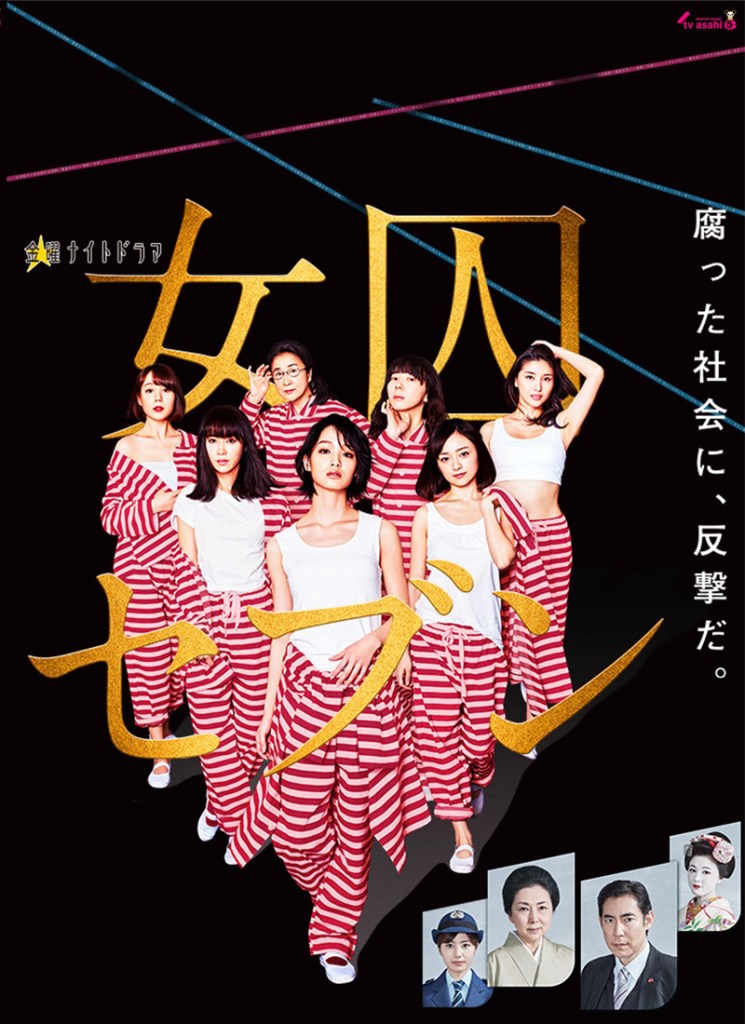
a crime drama centered around seven
prisoners in an all female prison fighting
injustice
a suspense drama about a
morally grey veteran detective and a suspicious woman in red
 Grow the Roses