
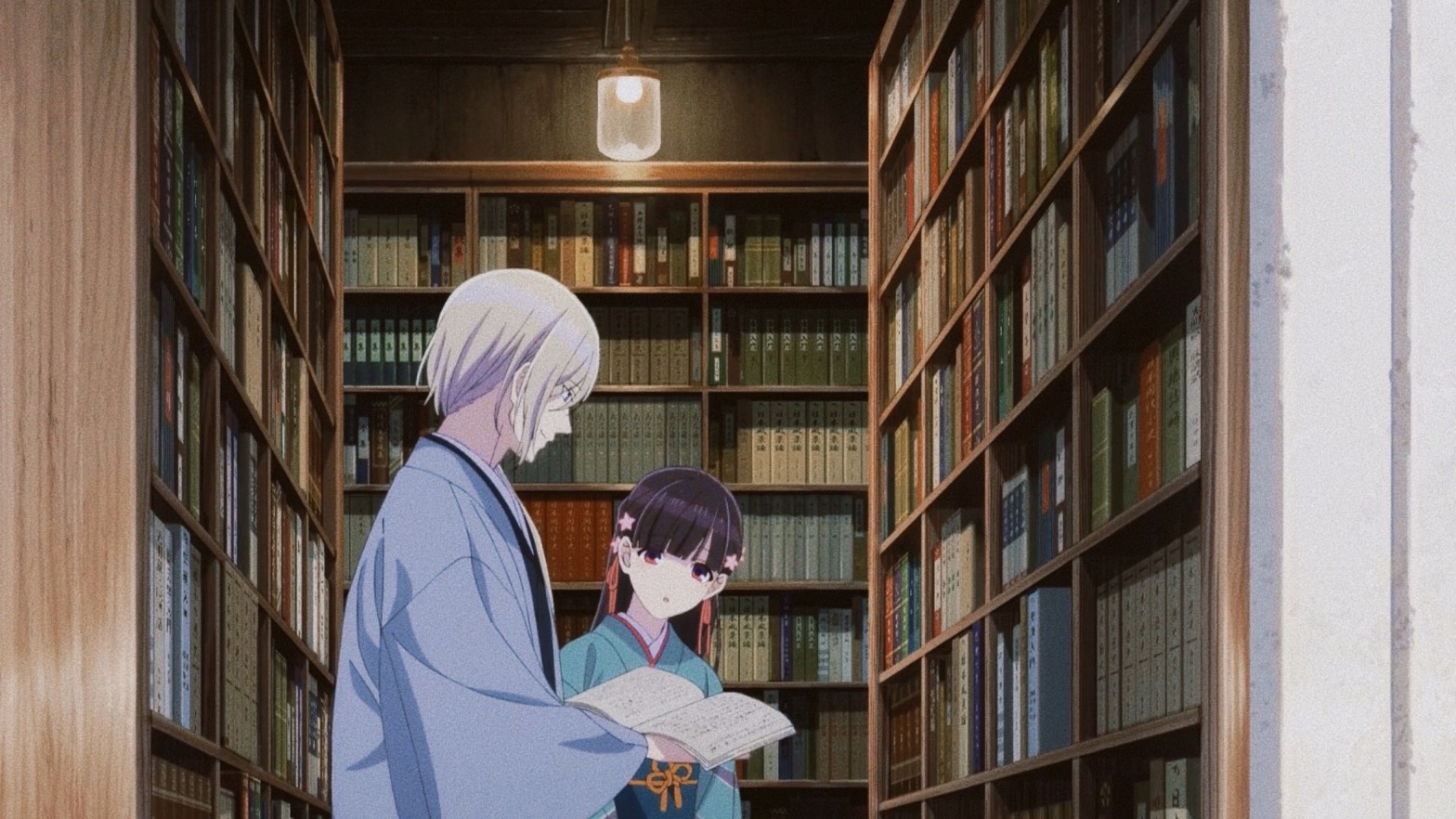
Despite being set in the fictional past, My Happy Marriage exemplifies the modern importance of communication and a balance of power in a romantic relationship that many fictional platforms lack according to present day keyboard warriors.
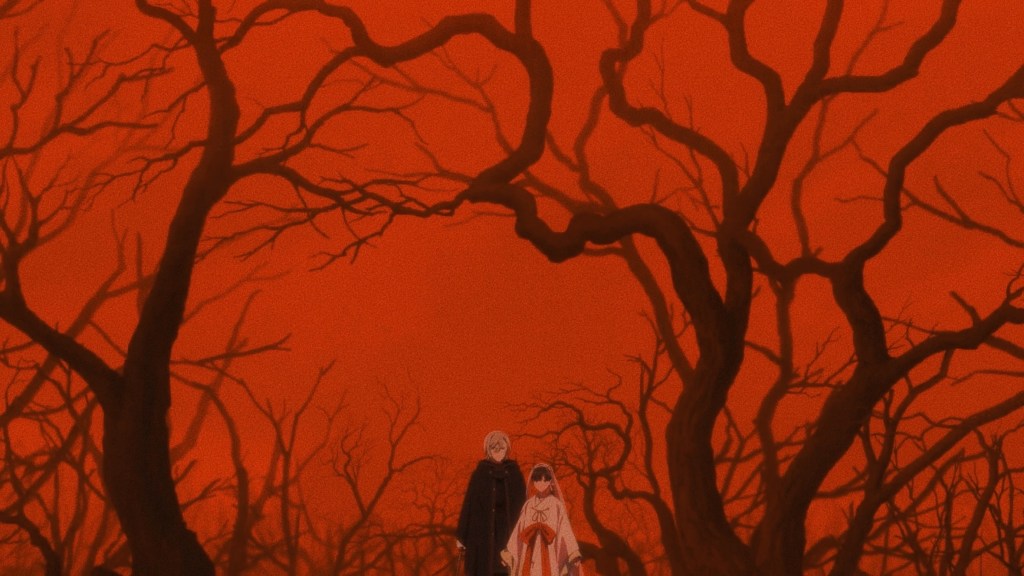
With society drowning in the communities of the online realm, it has never been easier for those to give their opinions on every single form of media that is placed in the public sphere– give this very blog post for instance. However, running rampant throughout short form media, are the heated debates of the many “morally gray” heroes of new fiction who some despise while others bear their beaten breast to. The men in fiction that young adults read are often criticized and put under a close feminist microscope; in the same vein, female protagonists sit in the petri dish right next to those men, wading in the juices of criticism. Is this character too unrealistic? Or too realistic that there is no pleasure in viewing their story? Is this character so shrouded in the shadows of the problematique that they are just utterly offensive?
As aforementioned, the online realm has taken over the population’s means of communicating. Many times when I personally would prefer to call someone to texting, I get met with a disgusted stare or a loud cry of despair at the thought of holding a phone to their ear in any capacity. One other change brought forth by advances in the online world is new, widely opened pathways to media previously unexplored by the Western eye. Now, not only a handful of Japanese books and shows are available, but hordes of them float into recommendation feeds on almost every popular streaming network. Gone are the days of watching an anime in seven parts with a two month wait between each episode because that is how long it took its one fan translator to voluntarily make the subtitles available— one thing I will never ever forget. That will be the millennial’s version of “I walked five miles to school, up a hill and through the snow.” So, not surprisingly, Japanese manga and anime, two of the most popular forms of media consumed by western young adults, are held under this previously mentioned tight fist of scrutiny as well. It seems no fictional couple is left without bruises. It seems true love’s kiss breaks a plotline instead of causing butterflies. It seems the white knight in shining armor is out of a job and kicked onto the streets. However, given the success of the 2023 Japanese anime, My Happy Marriage, the white knight might have hope yet.
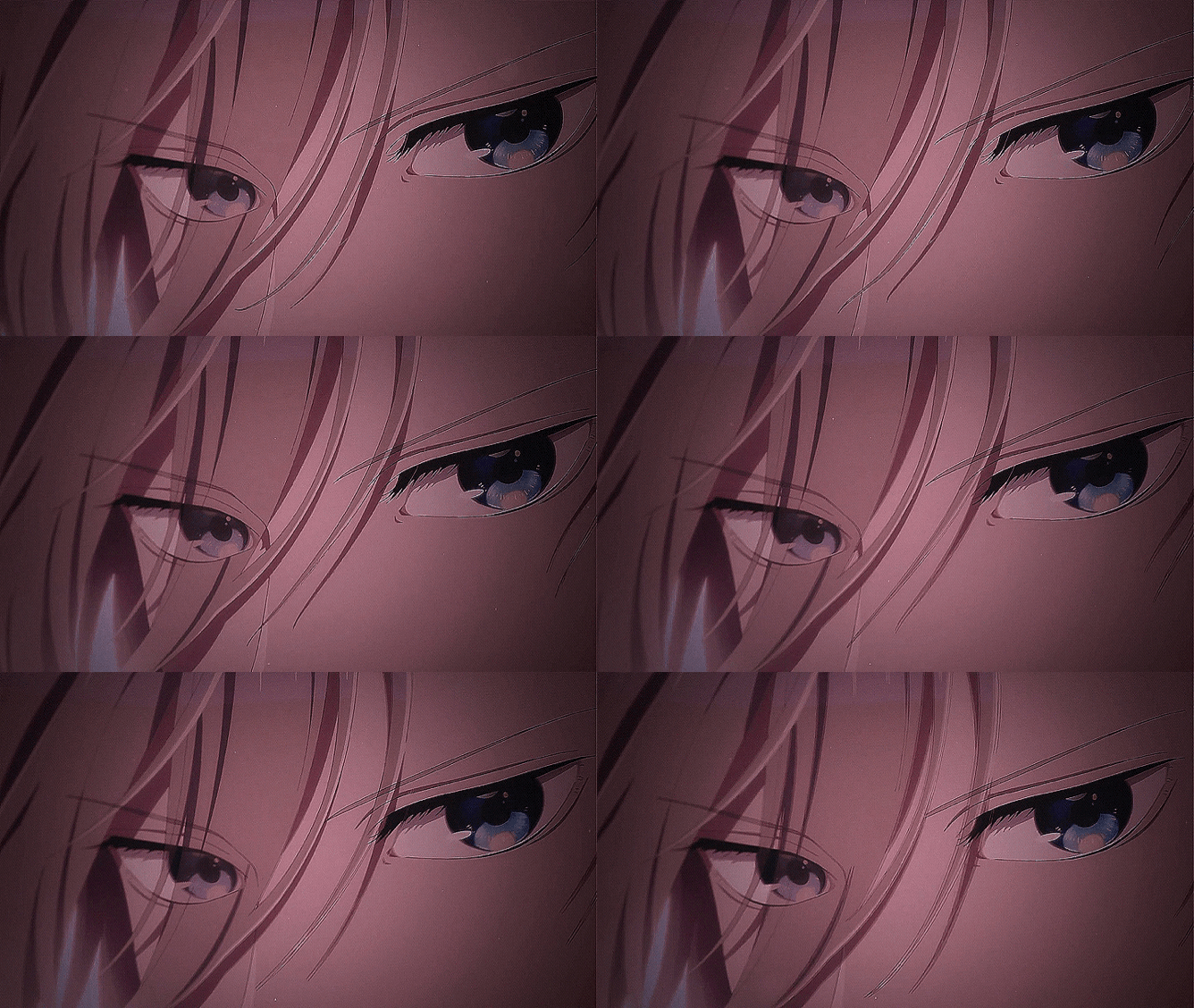
the white knight might have hope yet.
My Happy Marriage is a historical Cinderella story of sorts aimed at the hopeless, fantastical romantic. A young woman named Miyo, whose estranged father remarries a torturous woman with a power-hungry daughter, is abused throughout her child and young adulthood until she is eventually dumped into a presumed “doomed from the start” engagement with a stoic, distant military man. That might seem like a sweet gig, but the family’s end goal is for Miyo to be shunned for not having a supernatural gift, then thrown to the street and expunged from the family line. The military man, however, falls head over heels in love with Miyo and her earnest ways of living. This man’s name is Kiyoka Kudou, and he is, you guessed it, folks, the white knight in shining armor. This white knight does, however, have a real gift–not just a big sword and shield. Kiyoka can control both fire and lightning and is considered one of the most powerful magical users of his lifetime.
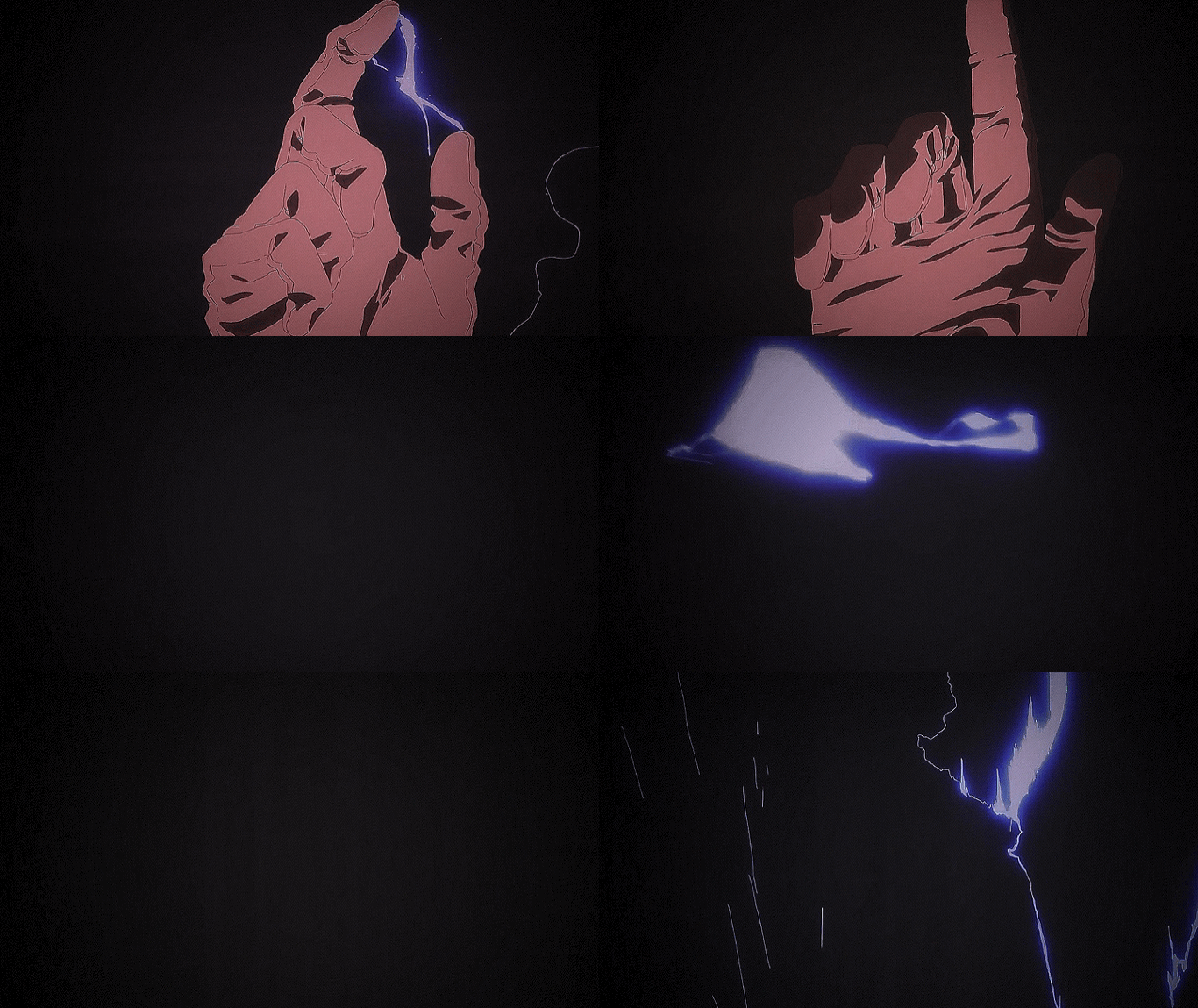
Kudou has numerous gifts surrounding the elements, his main one being lightning control.
This fictional world is wrought with conflict between various factions of the gifted; the more powerful ones are a constant threat to the miniscule magic users and the emperor makes sure to keep them in check. Miyo is deemed unimportant and a failure of her heritage due to her lack of a gift at all; however, SPOILERS, imagine the shock when Miyo ends up being one of the most powerful beings on the Earth, one that even the emperor wants locked away forever. This intriguing tale adds a supernatural element to the classic Cinderella tale of our youth, one that makes the dynamics of Kudou and Miyo’s relationship one that deserves discussion. Despite being set in the fictional past, My Happy Marriage exemplifies the modern importance of communication and a balance of power in a romantic relationship that many fictional platforms lack according to present day keyboard warriors.
One of the many critiques of fictional women is the idea that ladies are only crafted for the male gaze. Women’s only purpose in much of media is to serve as an accessory to man and his story– without one, she means nothing. My Happy Marriage flips that narrative on its head; in the eyes of this fictional world’s superiors, a person’s worth is primarily derived from the power of their supernatural gift regardless of their gender. For example, Miyo was deemed “a failure to the family” when she was only a baby because she showed no signs of possessing a supernatural gift.
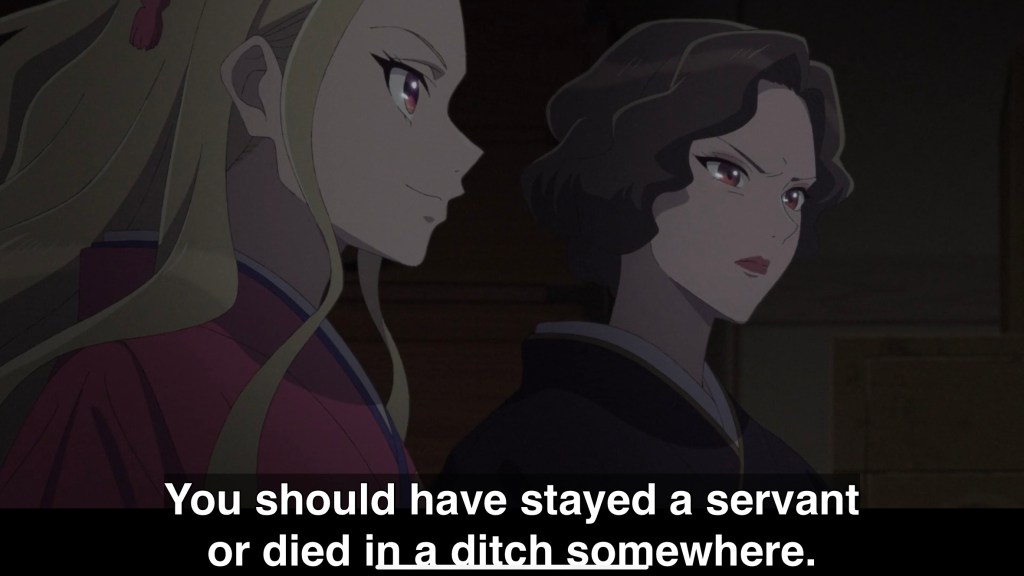
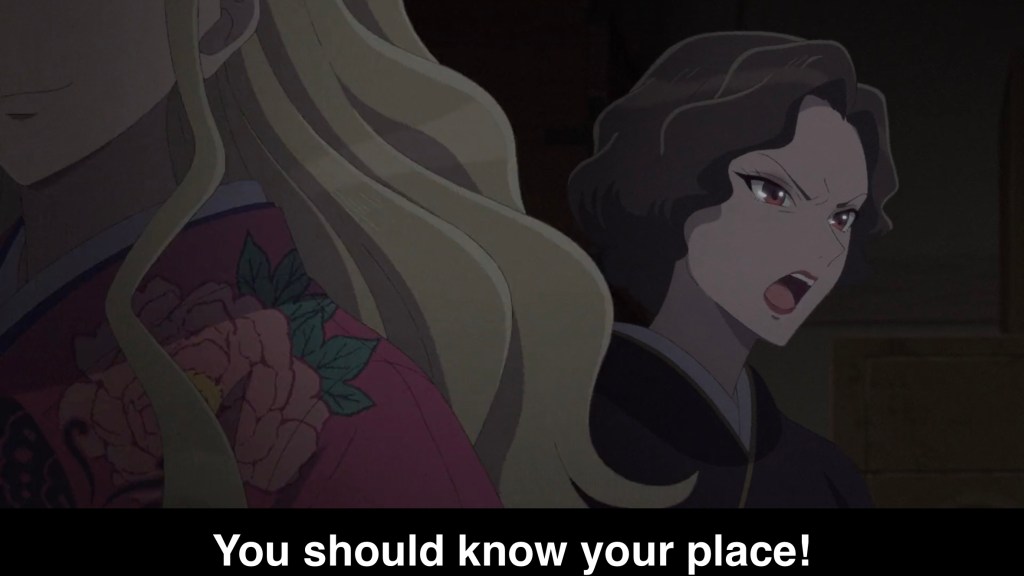
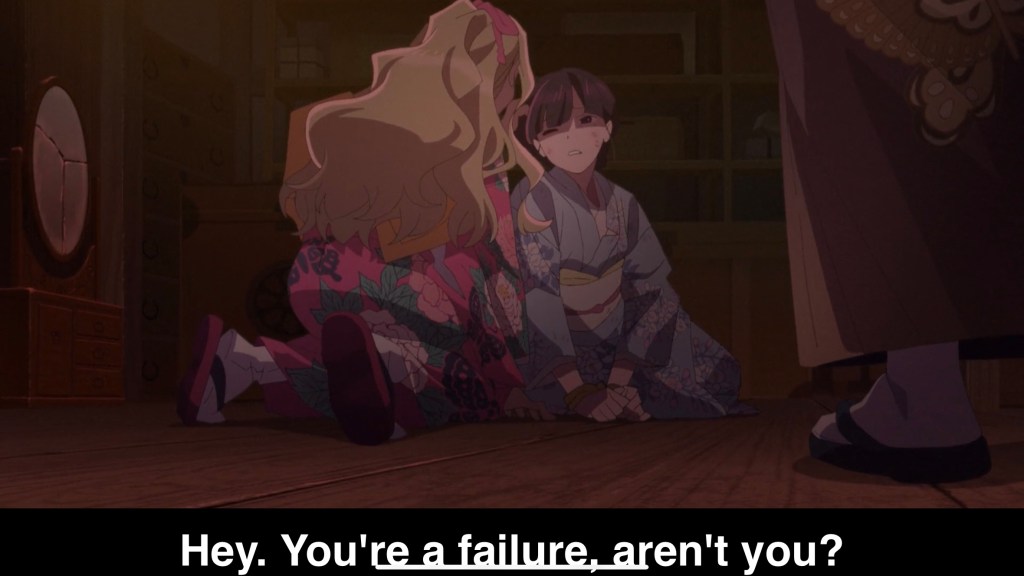
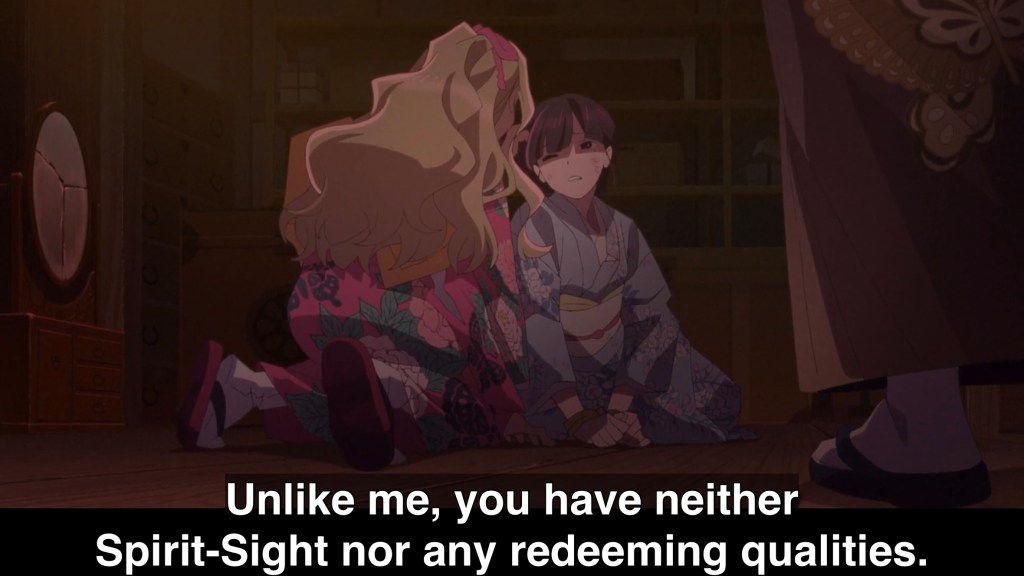
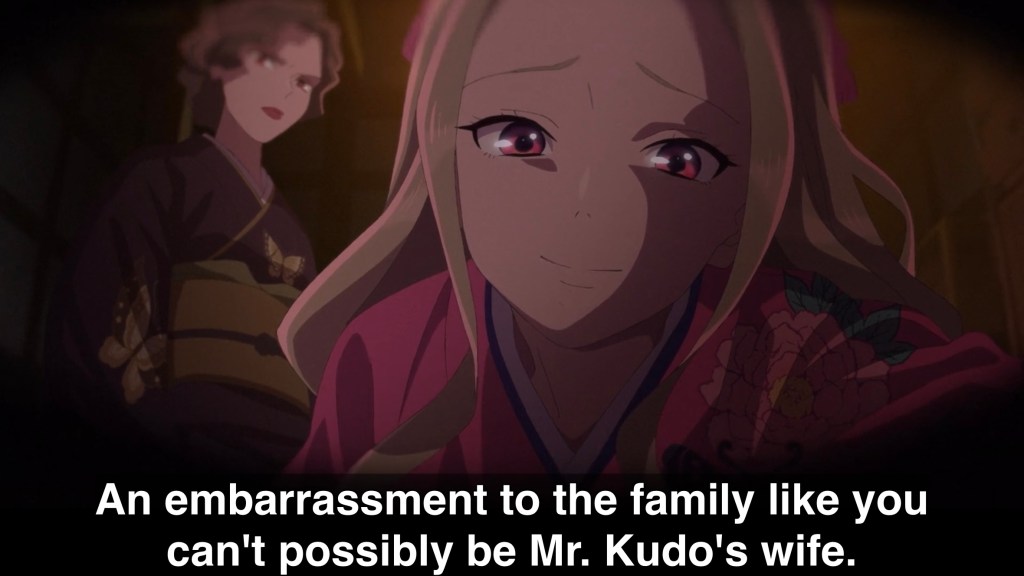
Miyo’s stepsister and mother literally trying to beat the self-worth and love out of Miyo in Ep 6.
In common society, some soon-to-be parents will be disappointed when their gender reveal shows the pair will be birthing a girl instead of a boy and if you look on YouTube, there are a plethora of video essays documenting the weird world of “TikTok Boy Moms” as the term has been coined. Our current society has a problem with the existence of the female as a whole. In My Happy Marriage, however, we see that Miyo was not a disappointment because she was female, but because she lacked a gift. We see this demonstrated in the treatment of Miyo’s stepsister; she has a powerful gift and is treated as a powerful almost goddess-like figure in the home, whereas Miyo was thrown at her fiancé’s household because she had no gift.
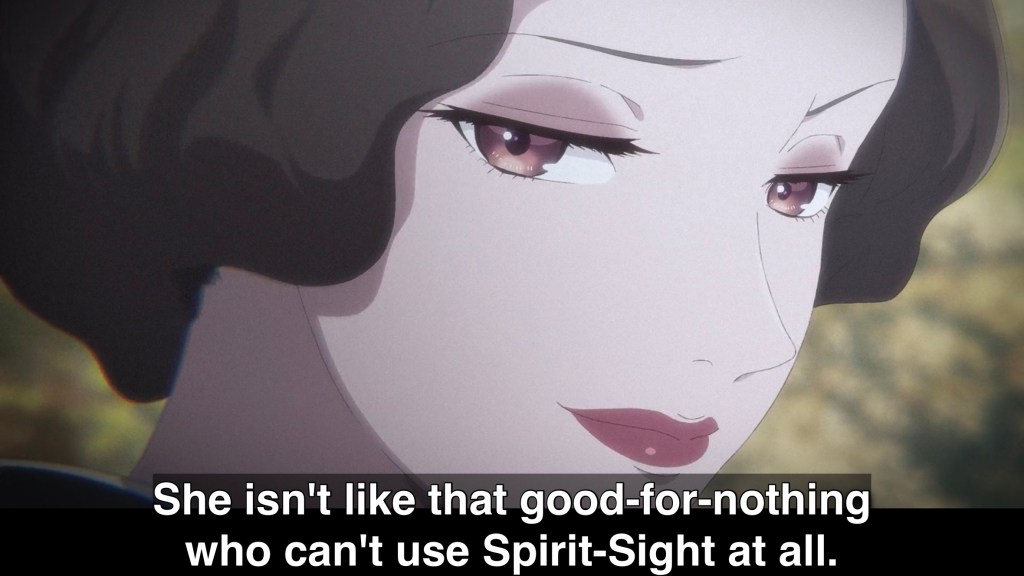
As a punishment for her lacking, Miyo’s family wanted her to be rejected by a powerful man and left in the dust. This is not the case, however, as we see that in Kudou’s household’s eyes, Miyo is seen as a human being who deserves love and kindness as much as anyone else regardless of having a gift or not. Kudou reassures Miyo that she was valuable even before they discovered her gift as we see in frequent scenes of him making sure she is okay and telling her that he is always there to support her.
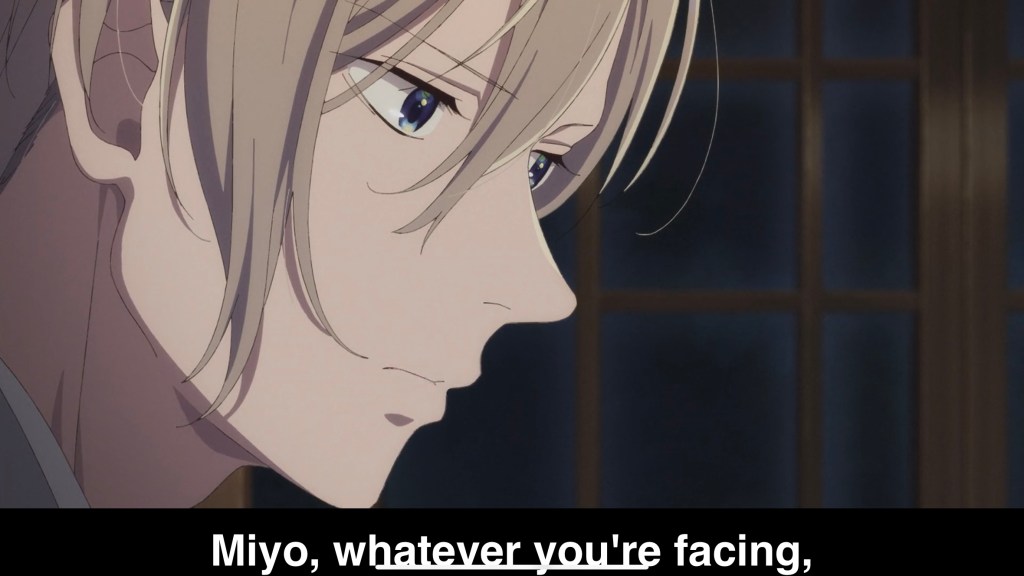
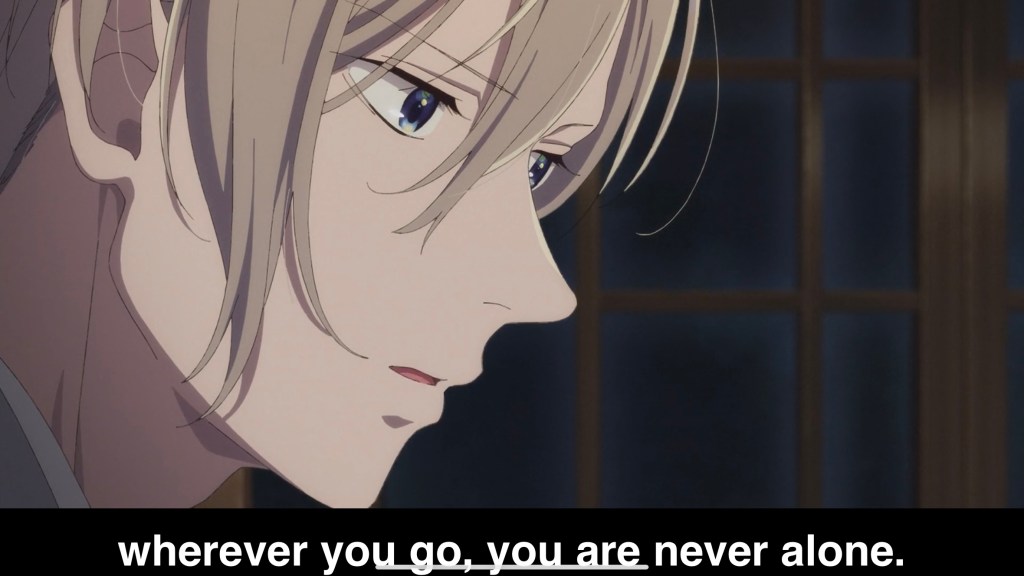
Kudou communicates clearly to Miyo that he desires her in every way despite what the world has told her for her entire life. However, communication is a two-way street– one that Miyo avoids for part of the series.
You can’t talk to a wall. Well, you can, but you won’t get any valuable advice back from it (and it’s kind of weird). Effective communication takes at least two receptive people to hold any meaning. Kudou tells Miyo how much she means to him, but unless Miyo digests that information and responds to it, what value does it hold to their relationship besides being wind passing through her ears.
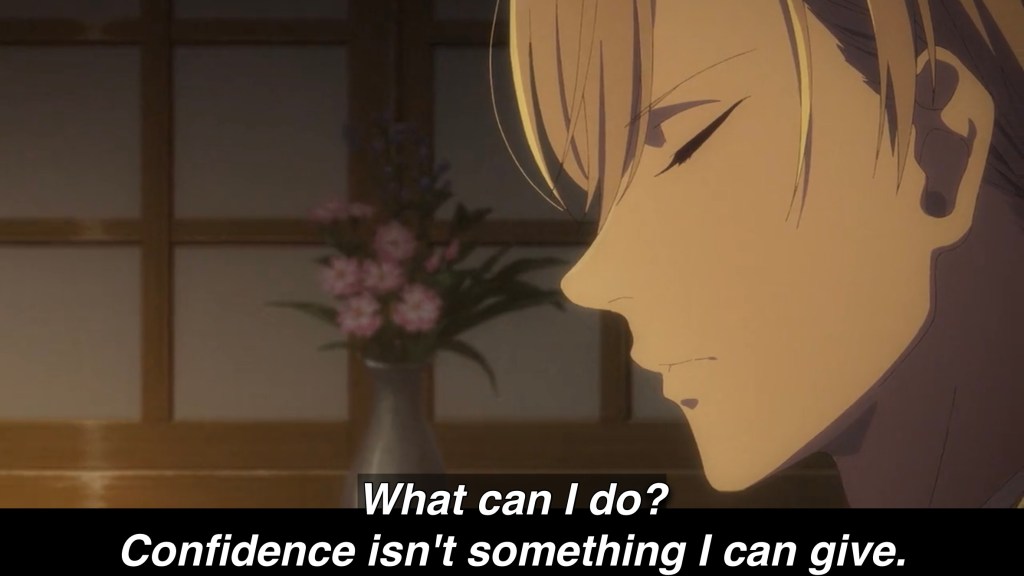
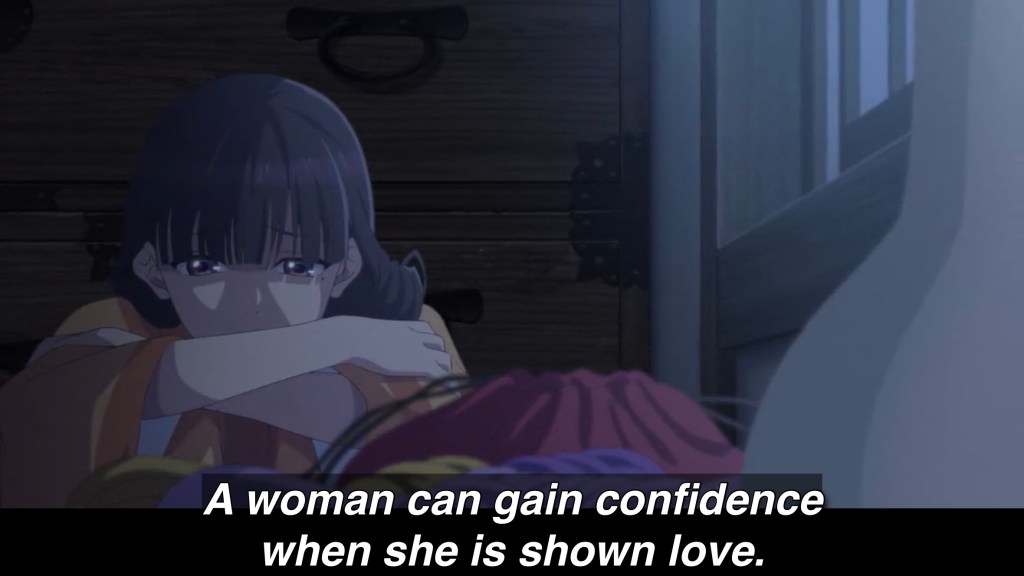
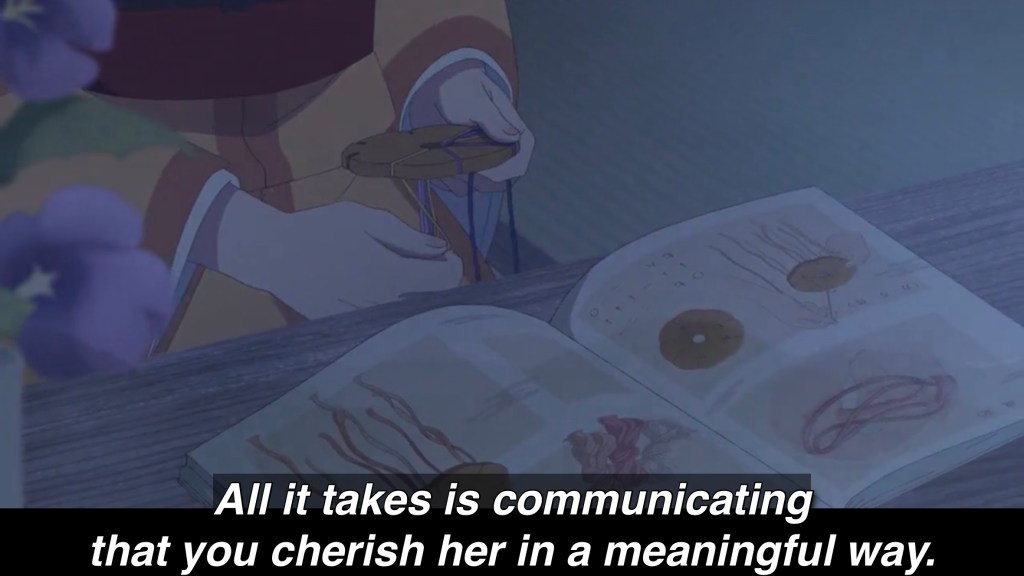
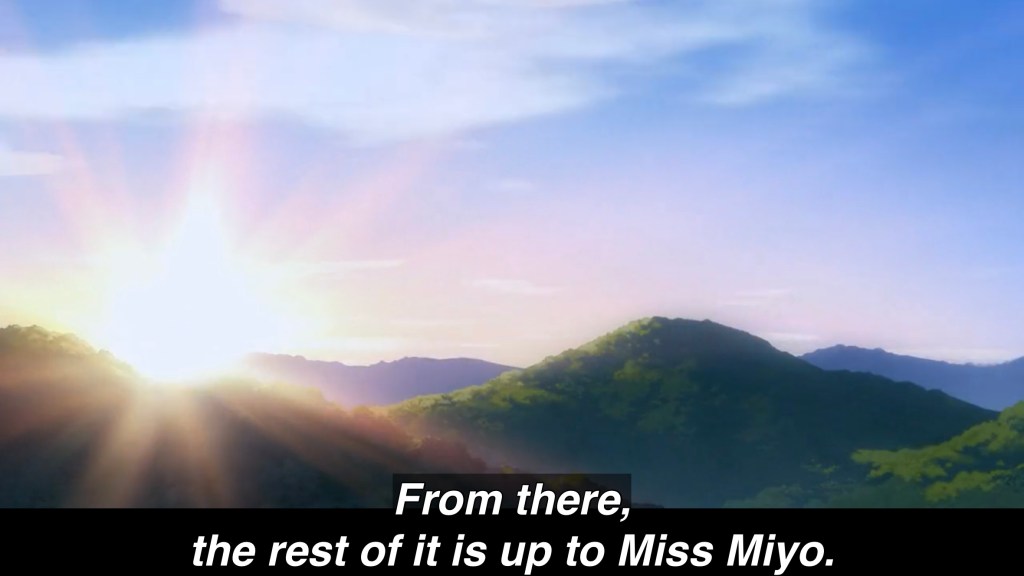
Kudou wanting to help Miyo, but also recognizing that he needs to respect her boundaries. However, in doing so, he is showing that he can be trusted.
Miyo’s familial trauma creates a fissure in her ability to love herself and permit herself to be loved by others. We see this when Kudou’s sister asks Miyo to call her “sister” and Miyo suddenly hears her stepsister’s voice, and the lights darken. Miyo agrees to another affectionate term instead and Kudou’s sister is pleased, thus, she opens a door for communication through compromise.
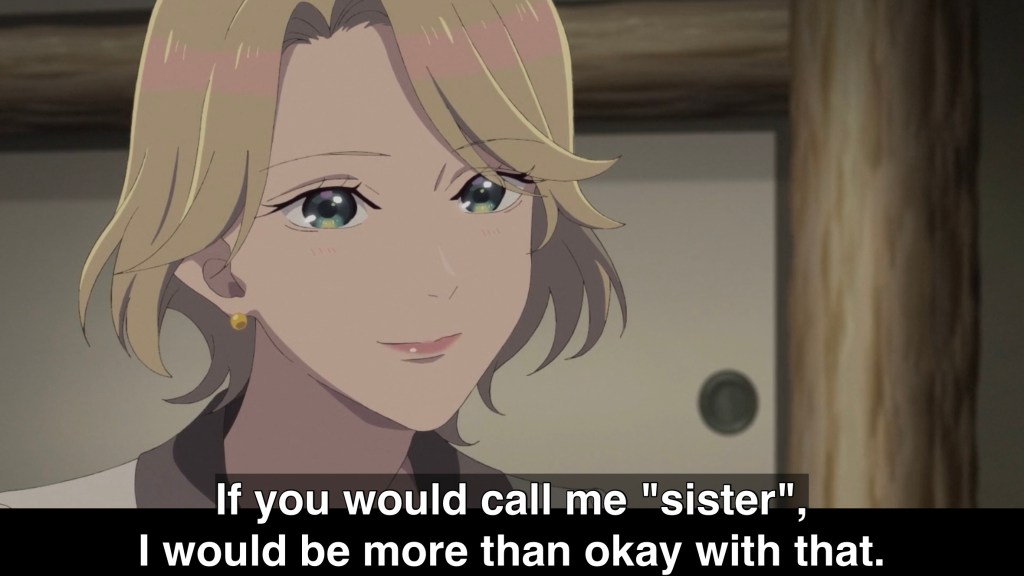
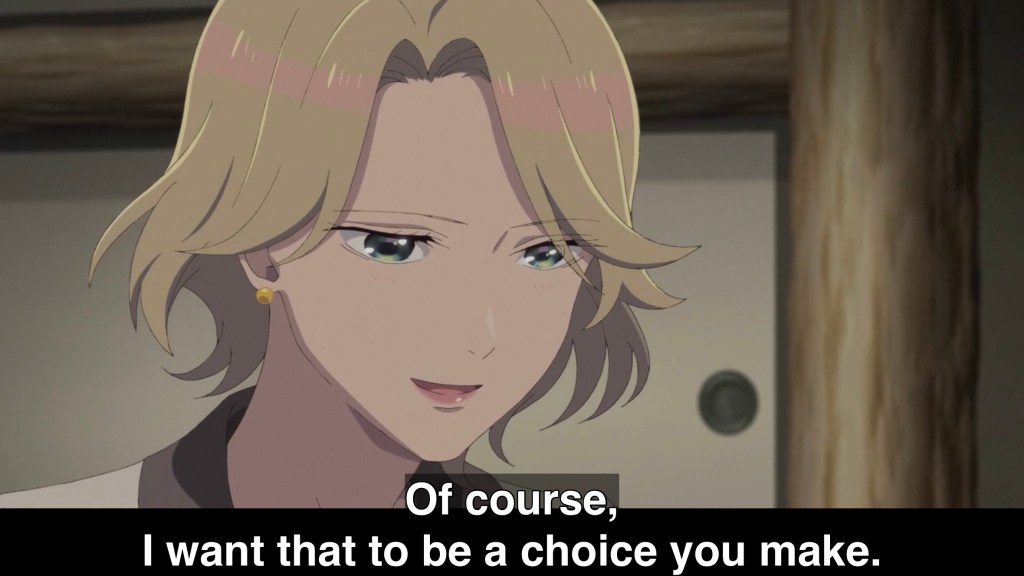
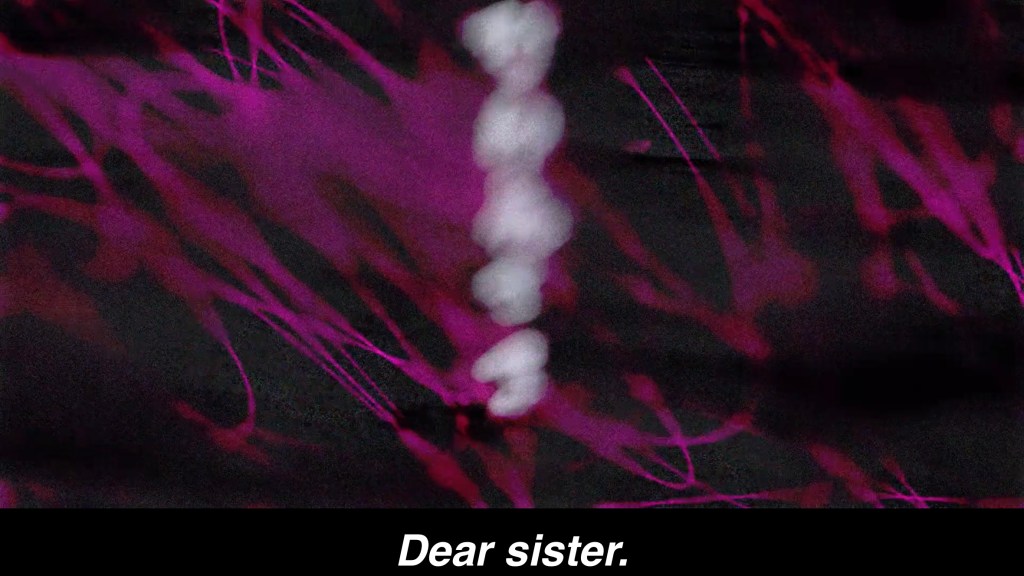
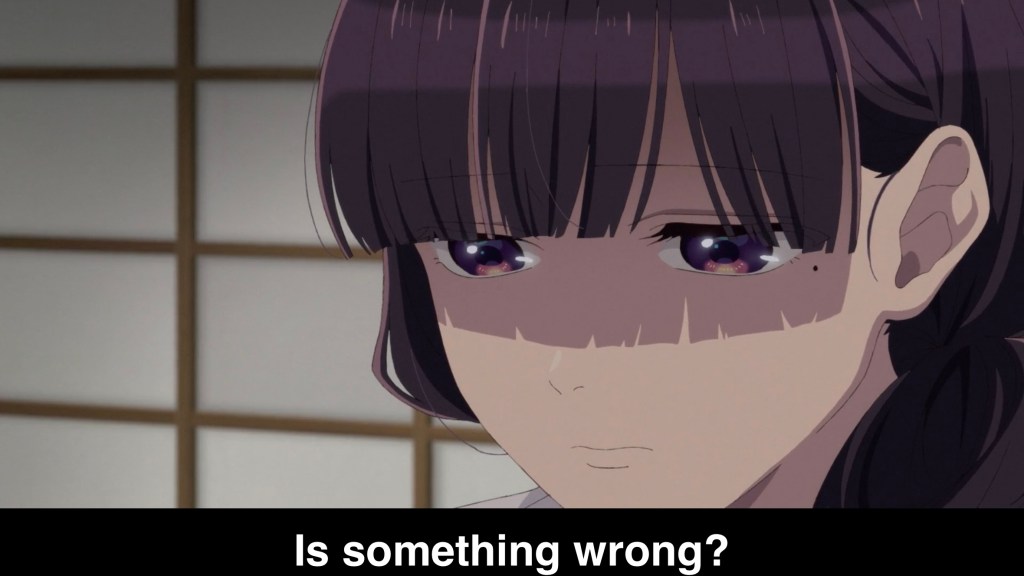
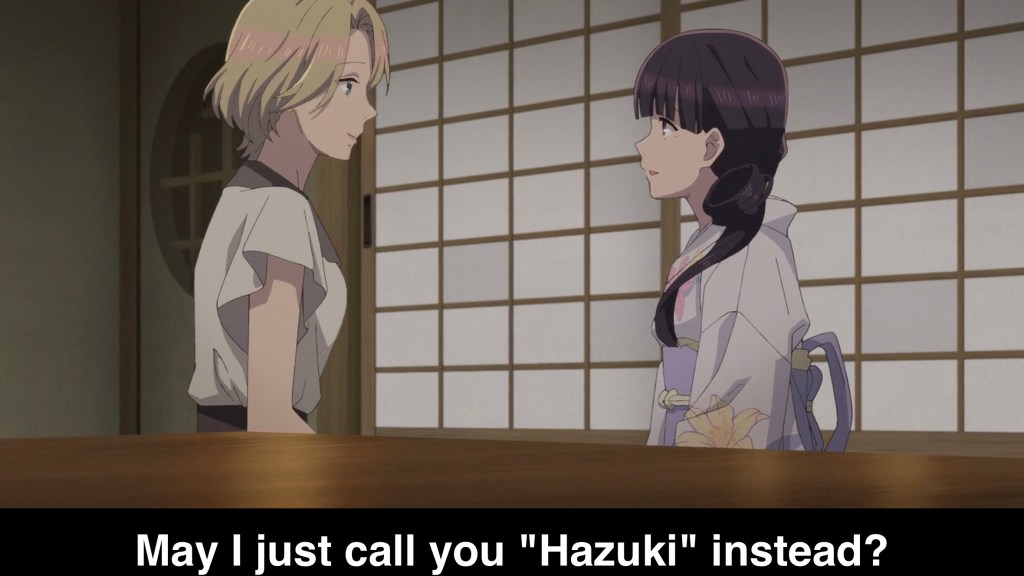
Kudou’s sister asking for a wall to be knocked down, but accepting just one brick coming off for now.
Miyo’s final battle against herself–literally and figuratively– serves as a symbol of Miyo believing in her voice and allowing herself to communicate her needs with Kudou freely; this battle is a result of her believing in herself, yes, but her confidence is heavily fueled by the love she has received from Kudou. He believed in her and accepted her when no one else had the courage to do so; in the wise words of popular media, if you can’t accept me at my worst, you don’t deserve me at my best.
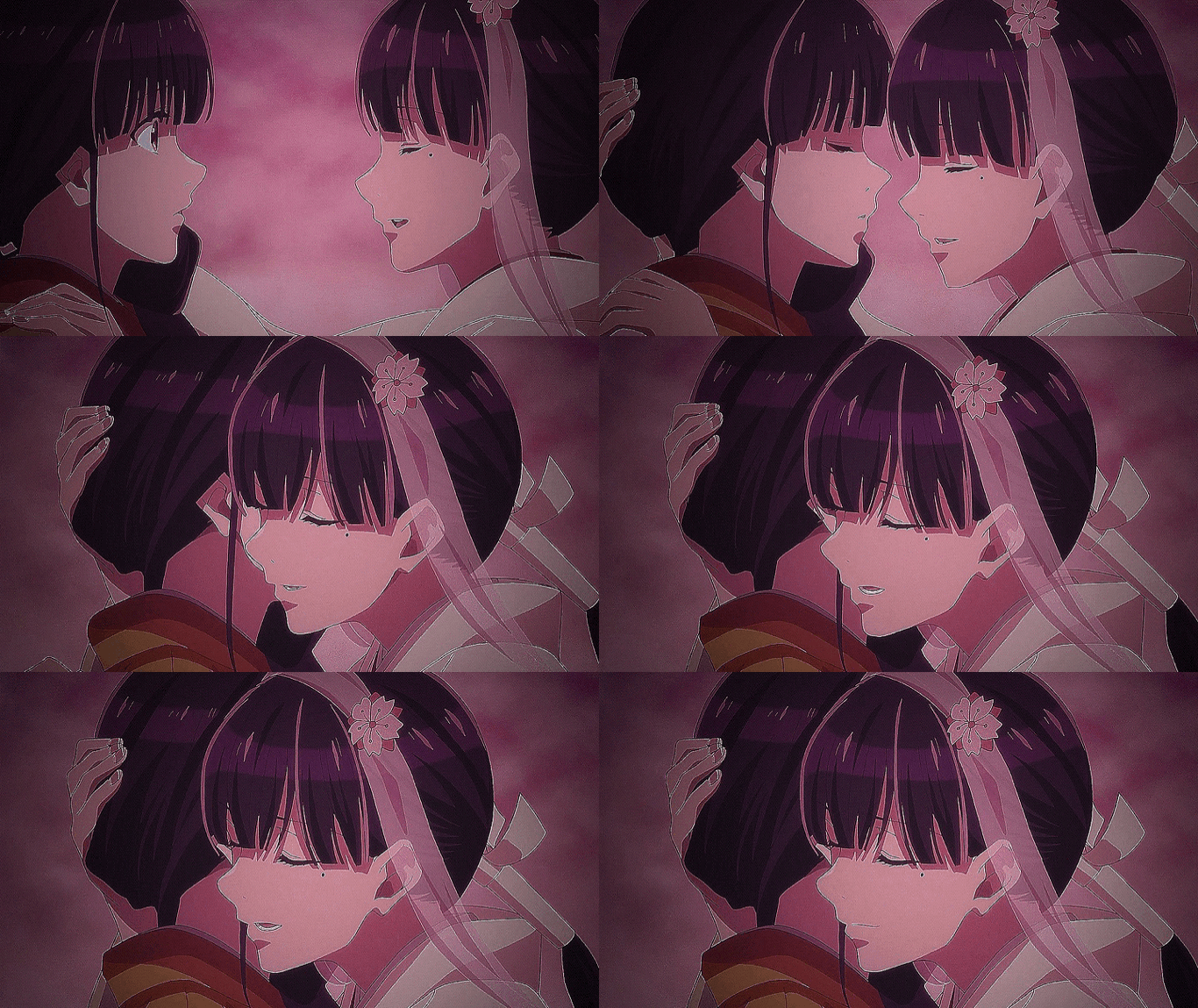
Miyo saves herself from her own self-loathing and hatred through learning to embrace all emotions– even if that means she will get hurt.
This conclusion leads to the idea that the white knight in shining armor isn’t extinct– it just needs to evolve. The battle that often leads people to spitting matches and ranting on the internet should not be aimed at the condemnation of the character trope itself, but it should be to fight for a change in what we define as the white knight in shining armor. My Happy Marriage is a perfect representation of what this change needs to be– a stereotype turned revolutionary. Kudou even has the silver white hair for the part, but he grows to be the true male love interest that you should bear your beaten breast to. His goal is not to dominate and assert his authority as the white knight, but to ensure the safety of his equals and show that he is not the only knight around– you can be your own knight and he will support you. Kudou even says that he was so worried about protecting Miyo but she ended up saving both her and him.
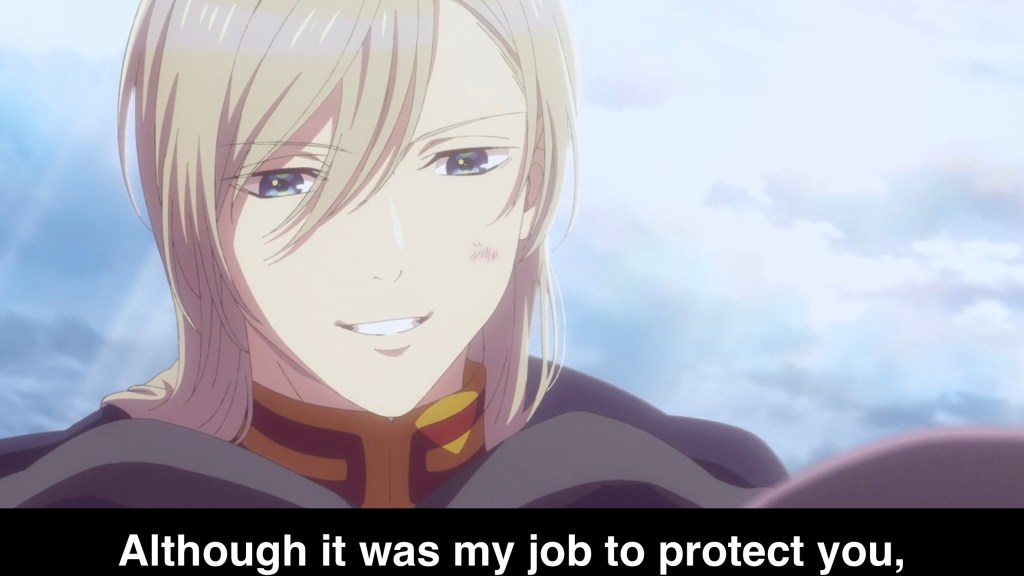
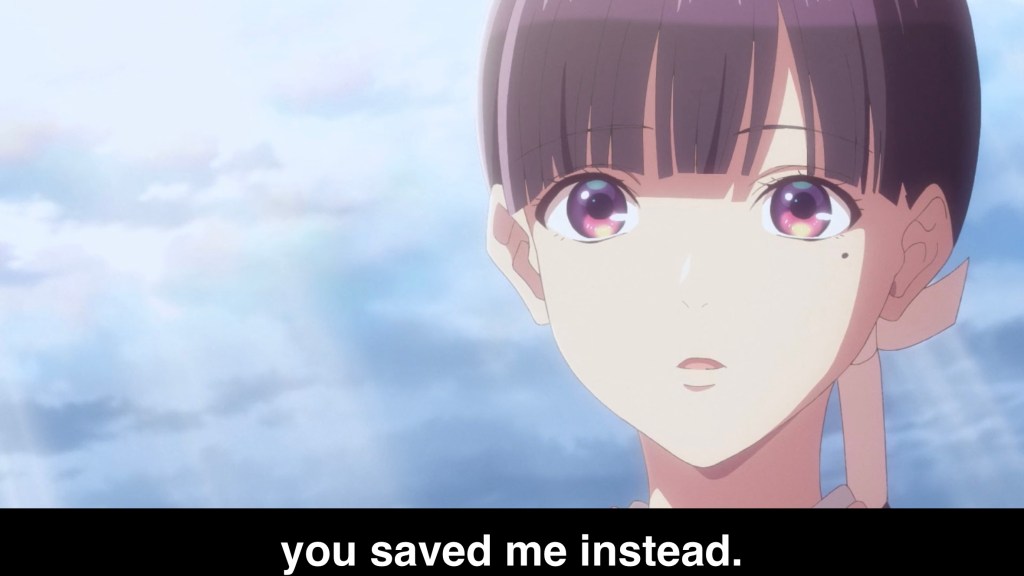
It is not said in a pandering or upset tone, but a respectful and kind one. He let the old-fashioned white knight mentality blind him to his partner’s strengths that do not include him. Kudou sees Miyo as his equal– not a damsel in distress. Through these acts, My Happy Marriage turns the stereotypes of fairytale romance into realistic relationship goals surrounding communication and boundaries (minus the supernatural gifts). As seen by one Google search, my opinion of this anime is one of many on the wide web, but still take it from me– this anime is worth the watch.
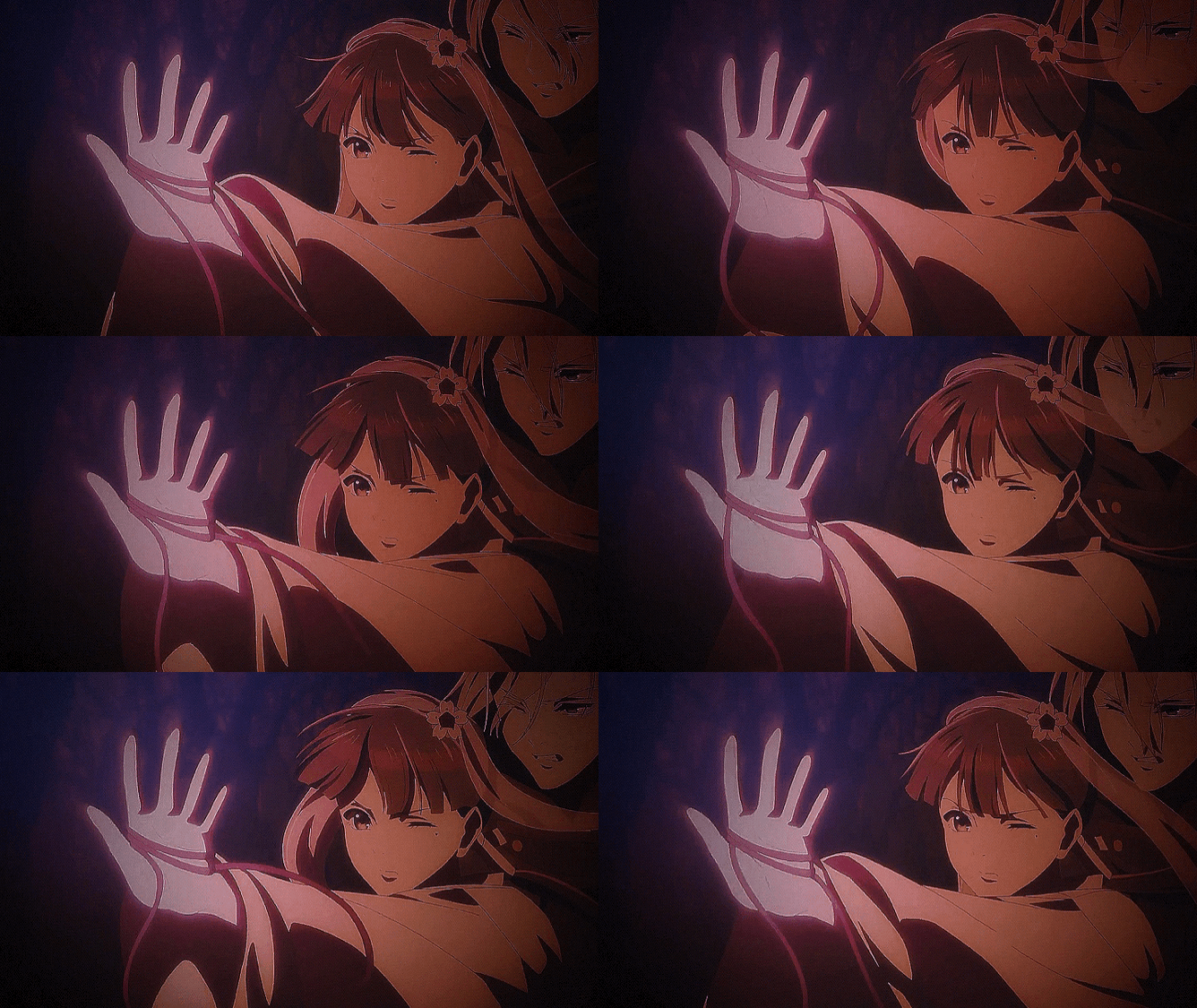
Final fight scene in Ep 12 of My Happy Marriage (2023)
Finished on: 1/20/2024
Tracked Themes:
- how value is derived from society
- treatment of women
- knots/bows
Rating: ⭐️⭐️⭐️⭐️⭐️/5 stars
Recommend? Y/N
Miyo’s final battle against herself–literally and figuratively– serves as a symbol of Miyo believing in her voice and allowing herself to communicate her needs with Kudou freely; this battle is a result of her believing in herself, yes, but her confidence is heavily fueled by the love she has received from Kudou.
If you like My Happy Marriage (2023), then I recommend:
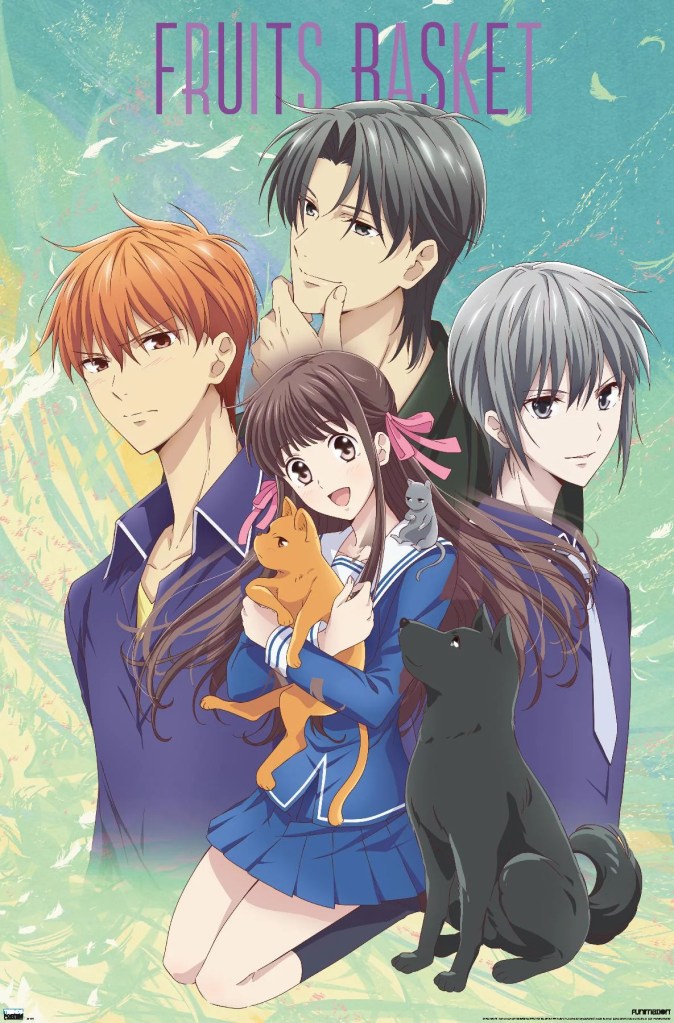

Includes supernatural beings and a seemingly ordinary girl with powers all her own.
Includes a rising herbologist on a mission to prove her worth amongst the ranks of royalty.
 Grow the Roses