

Even through mere objects like a watch or a mouthguard, Good Boy showcases the fragility of justice and resilience when covetous players attempt to control the clock. Whether it be fictional or in reality, corporate corruption plagues our world, leaving its mark on the passing of time.
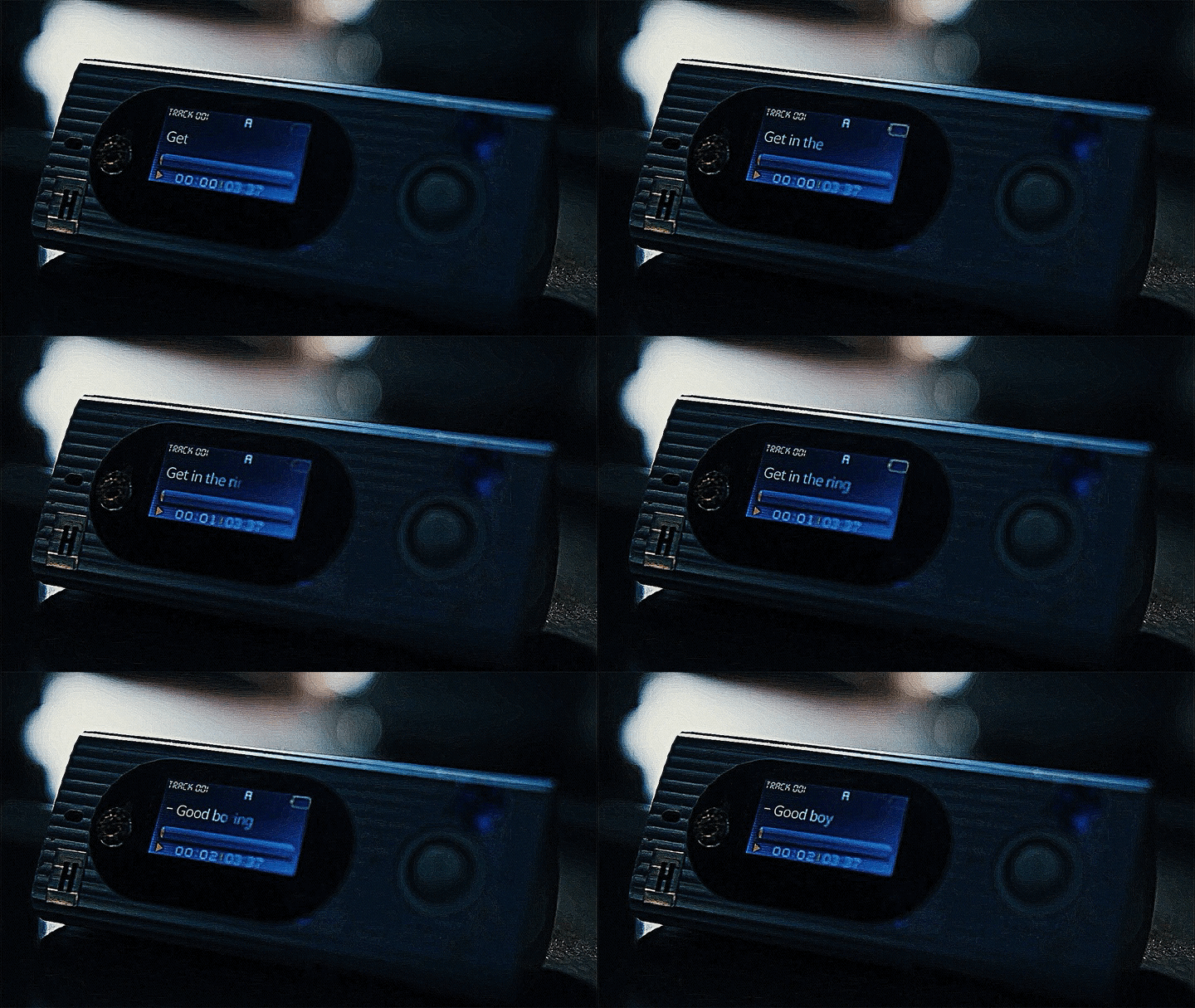
One of the best pieces of workplace advice a person can receive is to not look at the clock. We’ve all been there; anxiously, you glance at the hands of time thinking five hours have passed when in reality, only five minutes have crawled by, creating the exasperated sigh heard round the world. Just like the slow passing of time, life is full of tedious inconveniences. Kids say it all the time– “that’s not fair!” While these inconveniences can be as mundane as a child complaining about a playmate getting a bigger half of a cookie, they can also be worldwide causes of chaos, deception, and corruption; however, unlike the ease of giving a kid a bit more of a cookie, life’s slow passing of foul time can be a sucker punch to the face. After all, everyone learns at some point that life isn’t fair.
In the 2025 South Korean drama, Good Boy, an unlikely group of fallen athletes turned outcast cops grapple with the fact that justice is not as easily achieved in a world overrun with malfeasance and corruption. Dong-Ju, a young boxer with secrets of his own, becomes involved with an undercover cartel leader, Min Ju-Young, who is set on drowning in power and glory. In their intense game of cat and mouse, viewers bear witness to the truth that no, life isn’t fair, and justice often takes eons to come to fruition. The mundane accepts that life takes time, but in Good Boy, audiences also see that with everlasting capitalistic greed, people will attempt to move the hands of time themselves.
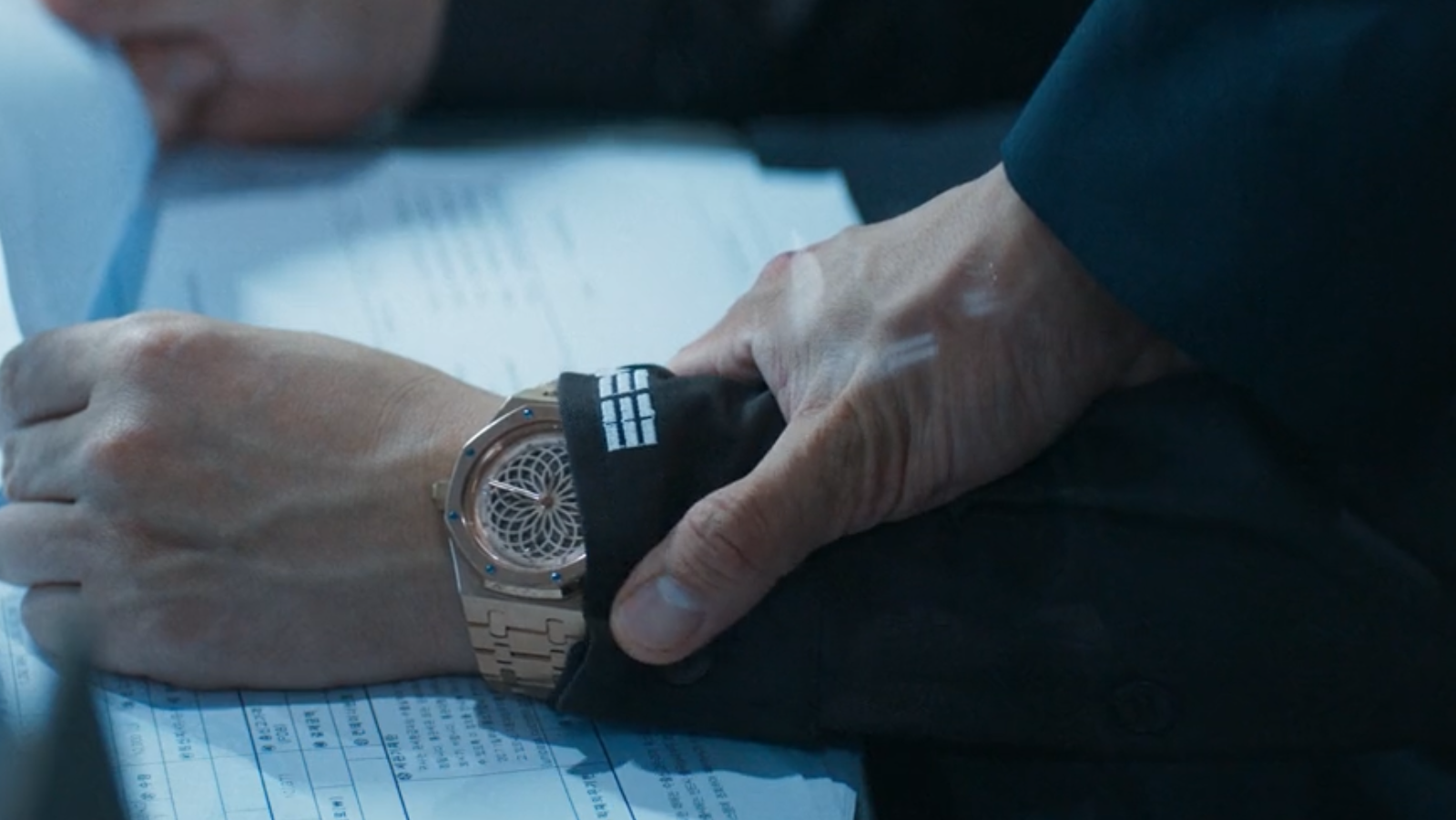
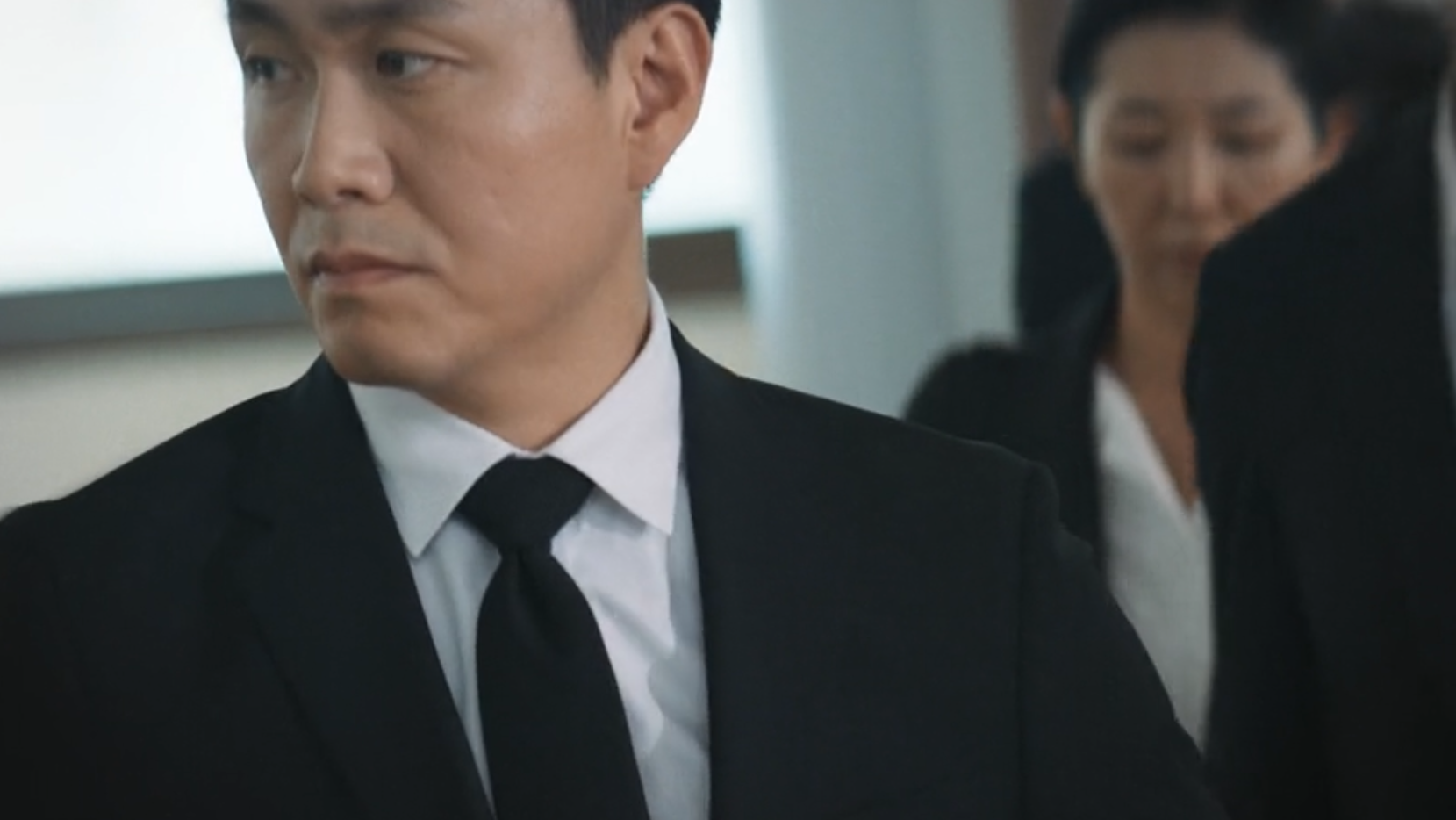
With that being said, Good Boy’s main antagonist, Min Ju–Young, is heavily characterized by his relationship with literal time. Min Ju-Young is a seemingly humble customs officer turned cartel leader with so much political power, he practically runs the entire city of Insung. As the show progresses, it is revealed that one of his markers of servitude within his cartel is a very specific type of watch. Ju-Young possesses the only authentic watch, as it is ultra rare and only made overseas, but he personally straps replicas of the model onto the wrists of those he considers authoritative in his crew.
With this significance, audiences can assume that Ju-Young considers himself in control of even time itself– that is how power drunk he is. We see this when Ju-Young murders his crime boss mentor, Oh Dollar, and screams that he can’t wait for the original watch, he wants it now. Ju-Young will not wait for his time– he will make it. This watch ties multiple generations of people together within the story; from Ha-na’s father to Dong-Ju’s childhood friend, the crude, materialistic wealth symbolized by the watch transcends time and consequence with every new wrist that presents itself. And as the drama masterfully showcases, oftentimes it does seem that the wrongfully wealthy live outside of the realm of justice, just out of reach of its grasping fingertips.
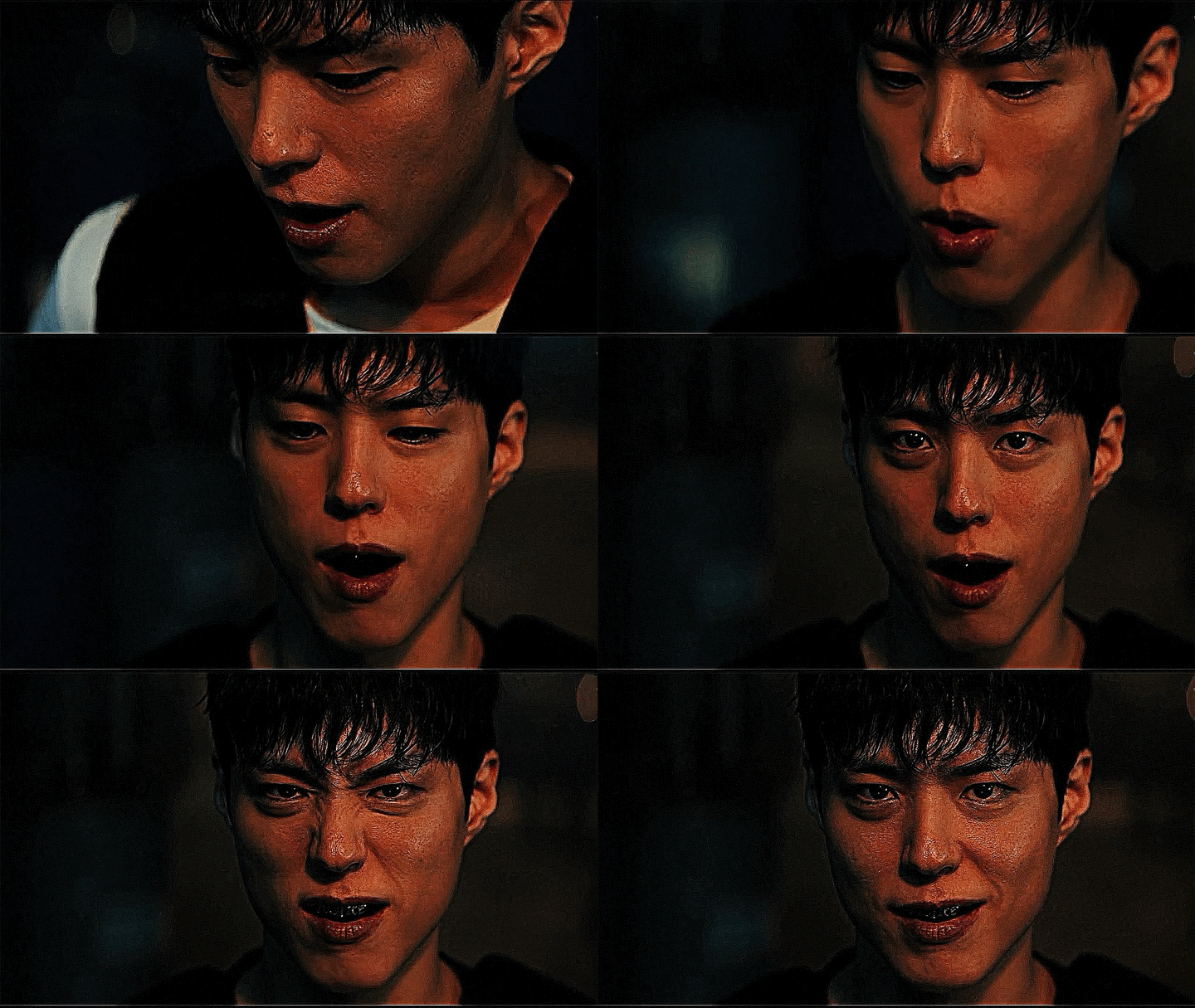
I say masterfully particularly because of the drama’s use of cyclical storytelling. An aspect I have seen in many a review of Good Boy broadcast as an insufferable weakness of the drama, the cat and mouse cycle of the main characters, realistically portrays the errs of fighting for justice in our crooked, capitalistic modern society. As each episode unfolds, we see our ragtag bunch of heroes seemingly catch the villain, only for him to get away and another layer of just how much power he holds is revealed. This cycle essentially runs the entire length of the drama, each fight overcoming the last in terms of stakes and damages. With every defeat, Dong-Joo and his colleagues appear sicker, slower, and less likely to triumph over corruption. Just when audiences think all the informants and members of this cartel are uncovered, someone else dies and the cycle starts again.
What other reviewers claim is unnecessary fluff added to extend the drama to sixteen episodes, I see as an accurate portrayal of how intricately twisted the pursuit of justice is in real life. More people than imagined will be revealed to be crooked; villains will keep getting away; and those working for justice will keep getting beaten down into the cement. Think of most true crime documentaries; catching a murderer is not just one interview, a pair of handcuffs, and a verdict– it takes years. And while watching Good Boy, the slow passage of time in taking Ju-Young down was felt in every blow to the head Dong-Joo suffered. Audiences absolutely were meant to feel tired while watching every fight scene, myself included. Justice takes its toll. So, I disagree; while some may argue that the drama could have wrapped up by episode twelve, the sheer enormity of Ju-Young’s presence in the town of Insung and his demise needed every tick of the clockhands given to it. If a man has cargo containers filled with so much money that he never even counts it, he will not go down unless it is in all encompassing flames.
With that being said, Good Boy leaves one question lingering in the minds of the viewers even after the ending credits– if it was this difficult for one city to loosen the clutches of capitalistic corruption, what happens when it spreads to the whole world? Through the inexhaustible and extensive power of its fictional main antagonist, Good Boy recreates the inescapable repercussions seen in our reality when the top 1% controls the livelihoods of the real everyday heroes. Dong-Joo handled Ju-Young, but we need to handle the Gates’, the Musks’, and the Bezos’ of our world. All facets of Insung were corrupt; from supermarket owners to the police to the mayor himself, one man had his dirty hands around all of their throats– just as we see in news headlines and social media posts in our daily lives. Corruption runs rampant in a society run by dollar signs and all of those with the dollars sleep in the same beds. If someone wouldn’t finish a sixteen episode drama because of its cyclical nature, I dread to think of their opinion on the state of worldly politics. The fruits of justice need constant surveillance; they take eons to grow, but can be plucked away in seconds. Just as the finale shows Ju-Young being strangled by an unknown police officer in his cell, another big bad will take control of the wheel of power unless the everyday hero consistently shows up in the ring.
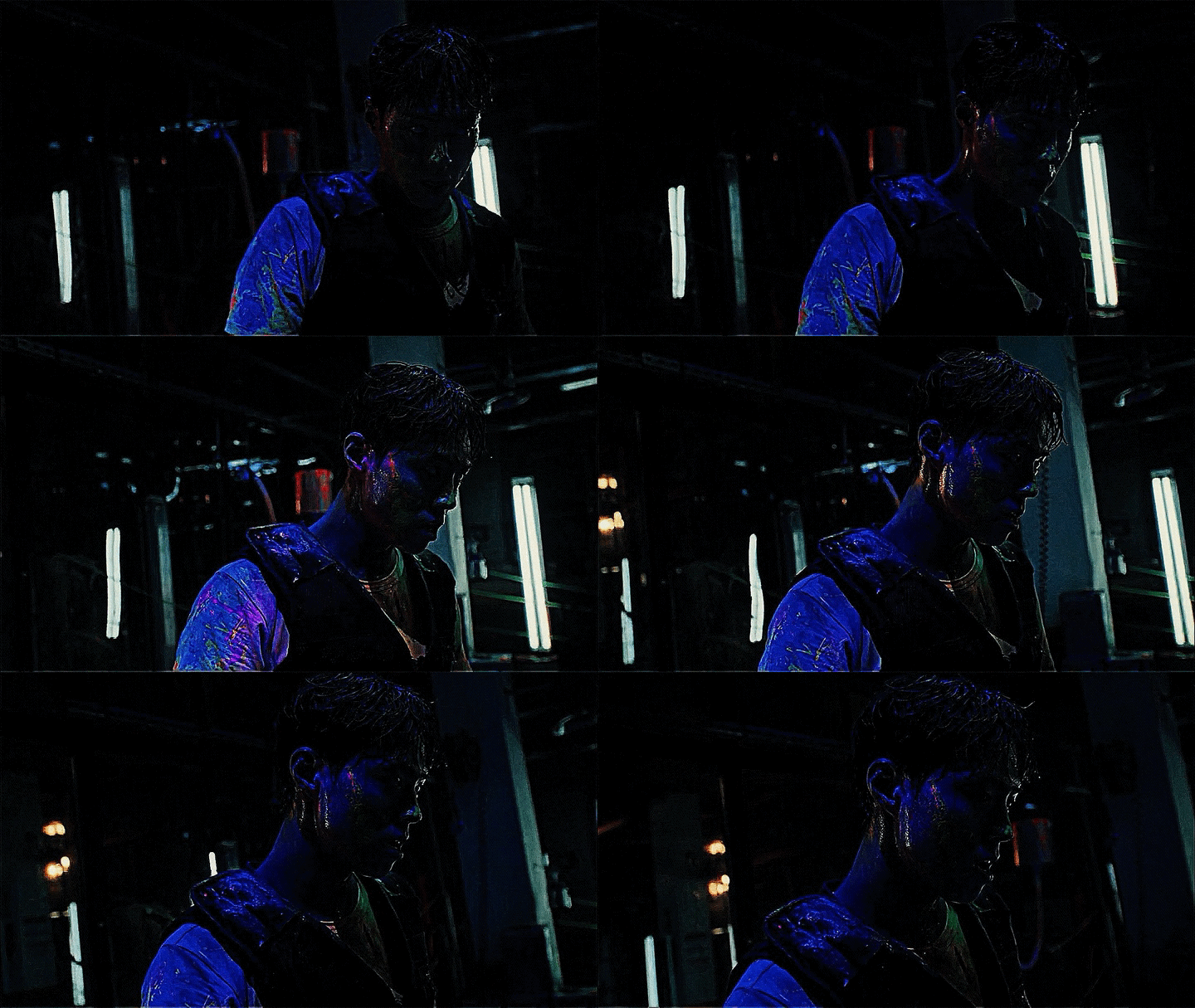
Justice is resilience and this sentiment manifests itself in Good Boy through Dong-Joo and his mouthguard. Arguably, Dong-joo gets beaten up the most in the drama, but much to the chagrin of his counterparts, he always bounces back ready to wreak havoc. As he states himself, Dong-Joo will run himself into the ground if it means obtaining justice in the slightest. His mouthguard, which literally has the word “justice” painted on it, becomes a physical representation of his resilience.
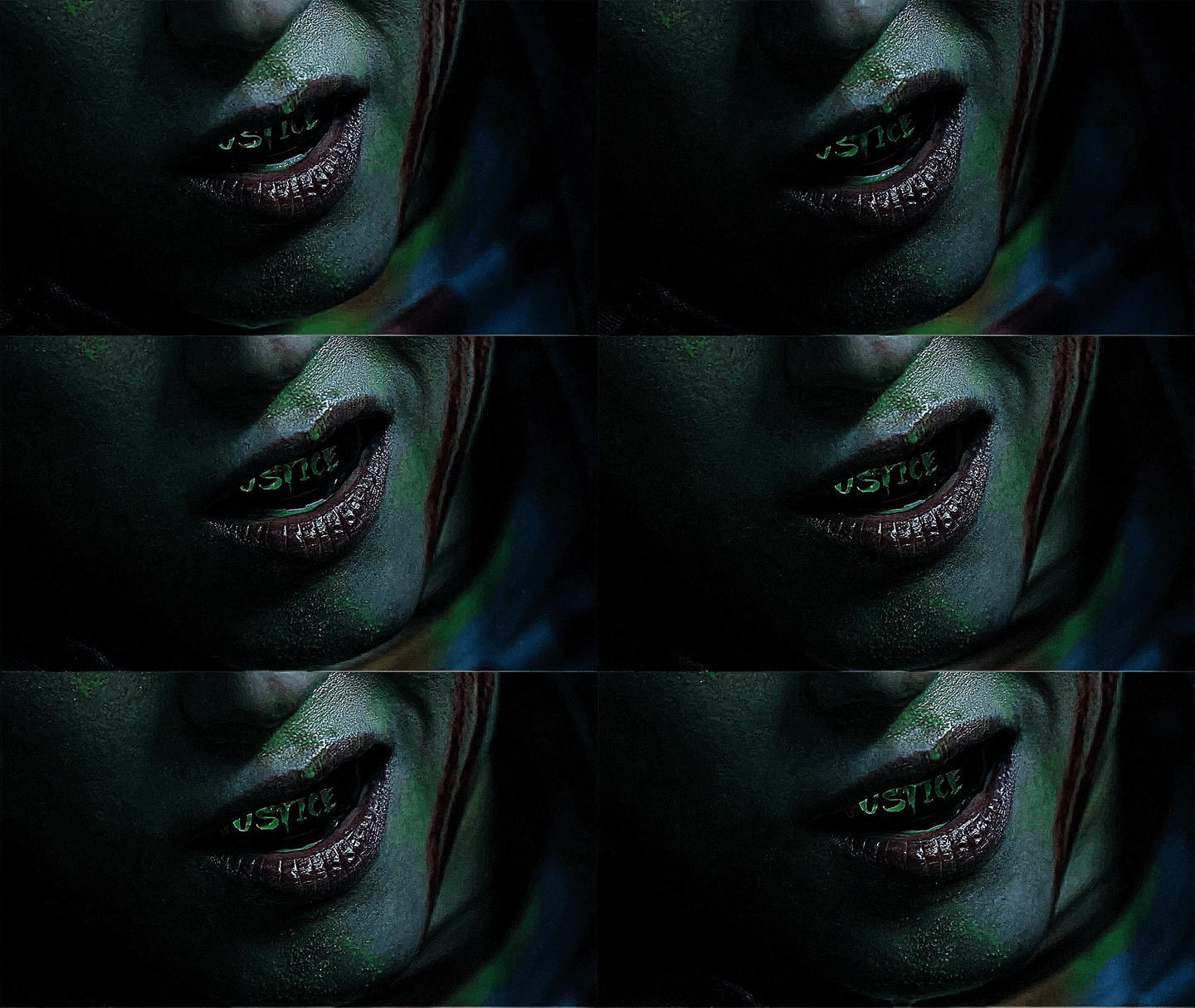
In general, a mouthguard serves as a shield to protect your teeth from extreme physicality and allows your teeth to literally bounce back from an attack.When Dong-Joo dons his mouthguard, this imagery signals to viewers that he is facing corruption head on. This is why in the final episode, when Dong-Joo shoves the mouthguard in Ju-Young’s mouth before delivering his final blow, Ju-Young spits it out as he gets pummeled in the jaw; he is literally served justice. Ju-Young has no resilience– all he has is money and a broken watch. That mouthguard represents every stab, every shot Ju-Young took in his dirty pursuit of avarice, and it pains him more than a self-inflicted blow to the head would. Through the characters of Dong-Joo and Ju-Young, Good Boy showcases that the single most powerful tool one can use against debaucherous regimes is resilience. You don’t control time, you use it as a means to come back stronger.
Resilience can change a lot about someone’s outlook on life, but even with the power boost, there are some things resilience cannot cure completely– like a brain injury. Despite its attention to detail to the laborious process of receiving justice, Good Boy seemingly speed runs the subplot of intense medical trauma experienced by a myriad of characters within the drama. Dong-Joo experiences a condition called being “punch-drunk,” when the optic nerve is damaged from repeated head injury, which can cause blindness. Ji Ha-Na experiences bouts of dizziness, ultimately never identified. Jong-Hyeon seemingly has PTSD from his last fencing match that affects his ability to fight on the job when faced with blades in close proximity to his face. All of these serious conditions are consistent issues every episode until the last two, when they seemingly are relieved through a quick set of pills or, in Jong-Hyeon’s case, smashing his glasses into two. Unfortunately, the imbalance of writing prowess seeps through the cracks here as the plot bites off more than it can effectively chew. No one can control the passing of time– unless your brain needs to recover so you can fight the last battle in twenty minutes.
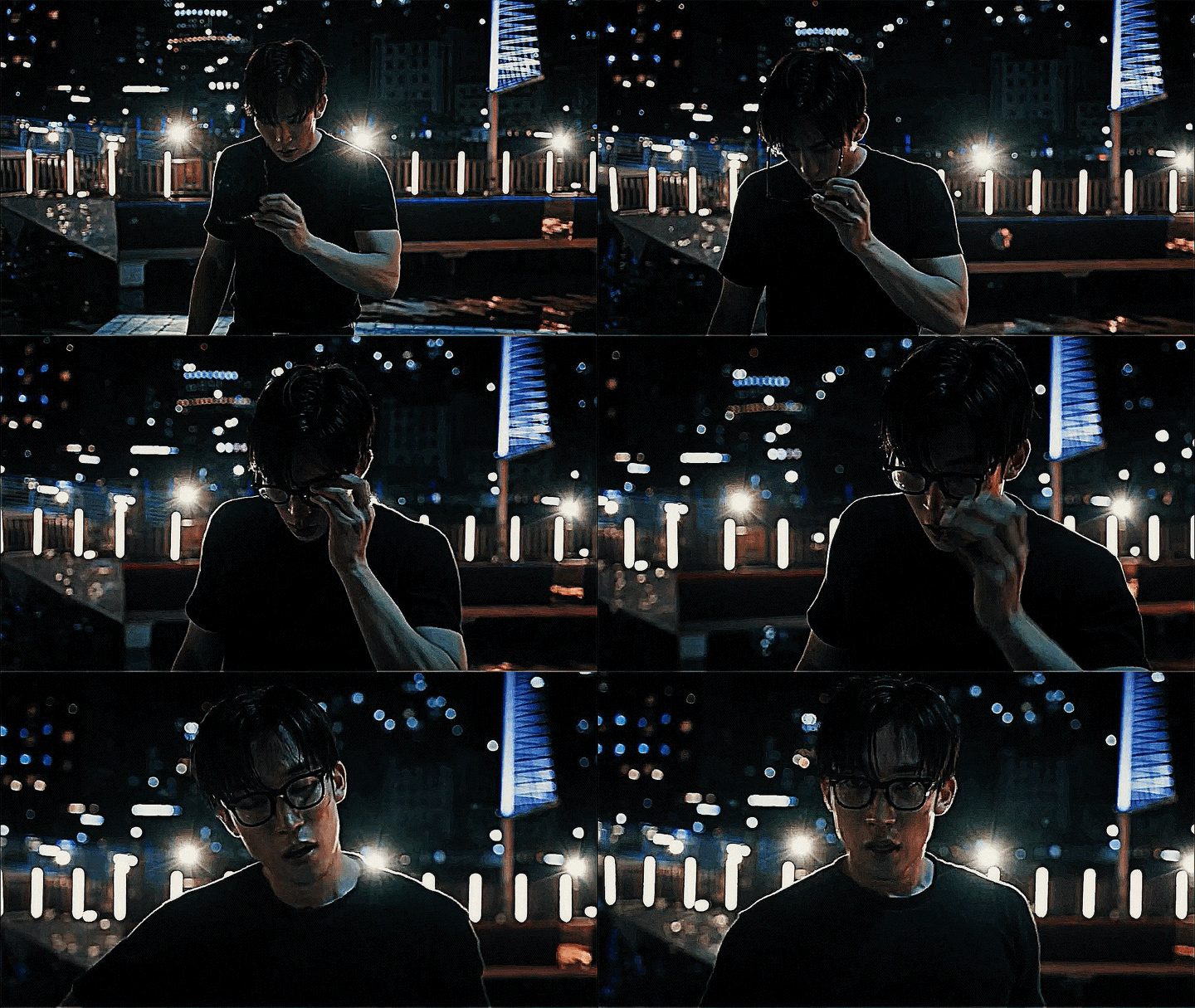
Even through mere objects like a watch or a mouthguard, Good Boy showcases the fragility of justice and resilience when covetous players attempt to control the clock. Whether it be fictional or in reality, corporate corruption plagues our world, leaving its mark on the passing of time. Justice does not happen overnight; it is a consistent process that takes lifetimes. Both Dong-Joo and Ju-Young admit that this fight will not end with them–someone else will pick up where they left off when the time comes. This is why it is so important to teach resilience to those kids that complain about unfairness, about not getting the bigger half of the cookie. Creating opportunities for justice takes the ability to not only throw, but take punches and come back stronger from them. Messy is the definition of life, it is unfair and ugly, and if you don’t clench your teeth, your jaw will dislocate.
Finished on: 5/24/2026
Tracked Themes:
- time
- treatment of women
Rating: ⭐️⭐️⭐️.8 / 5 stars
Recommend? Y/N
” Nobody is born good; I am just making an effort to be good so I don’t regret it later. “
– Good Boy [2025]
If you like Good Boy [2025], then I recommend:
a crime drama centered around a dystopian South Korea that serves justice to criminals through a voting reality show simulation.
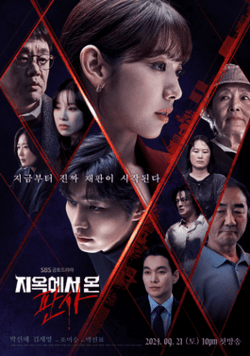
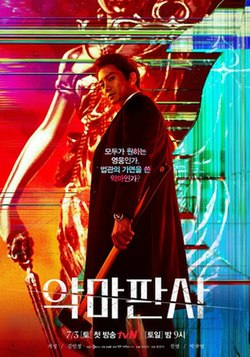
a crime drama centering around Justitia, a banished demon judge, willing to do anything to make her way back to Hell.
 Grow the Roses